
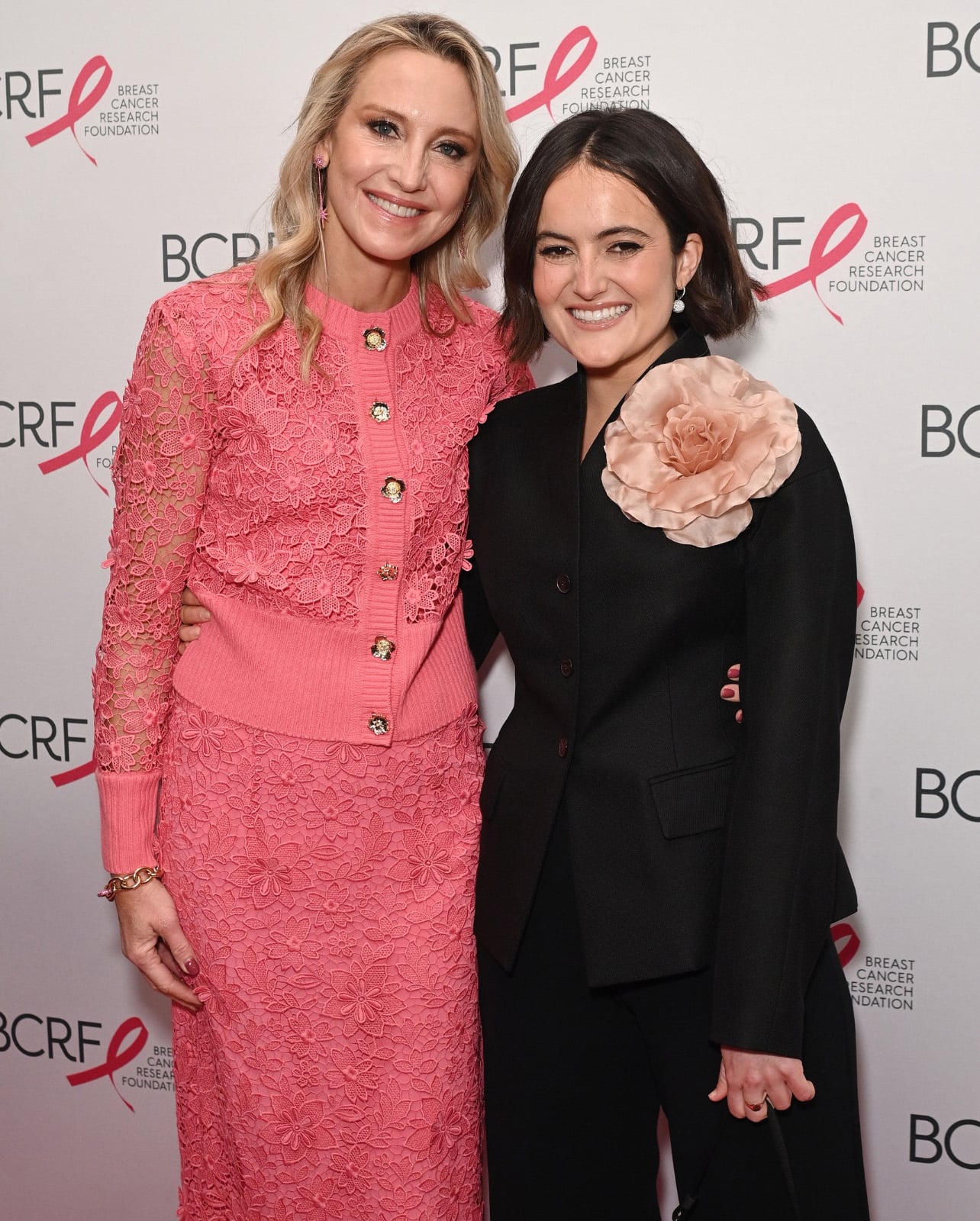
Kinga Lampert and Eliana Lauder.

Lauder with her grandmother in 2006.
For most of Eliana Lauder’s life, breast cancer belonged to her grandmother’s generation. Then her own friends started getting diagnosed. The Breast Cancer Research Foundation had been woven into Eliana’s family life long before she understood the magnitude of what her grandmother Evelyn Lauder had created. Some of her earliest memories are of leaving California with her best pink dress packed for BCRF’s annual Hot Pink Party in New York. “My grandparents never really separated these things,” she recalls. “BCRF stood for making people feel beautiful as much as our family business did.”
But it is Evelyn’s quieter acts that have stayed with Eliana: missing family dinner to counsel a newly diagnosed stranger; sending wine and fresh sourdough to women facing breast cancer. Years later, when one of Eliana’s own friends was diagnosed, she found herself sending the same care package.
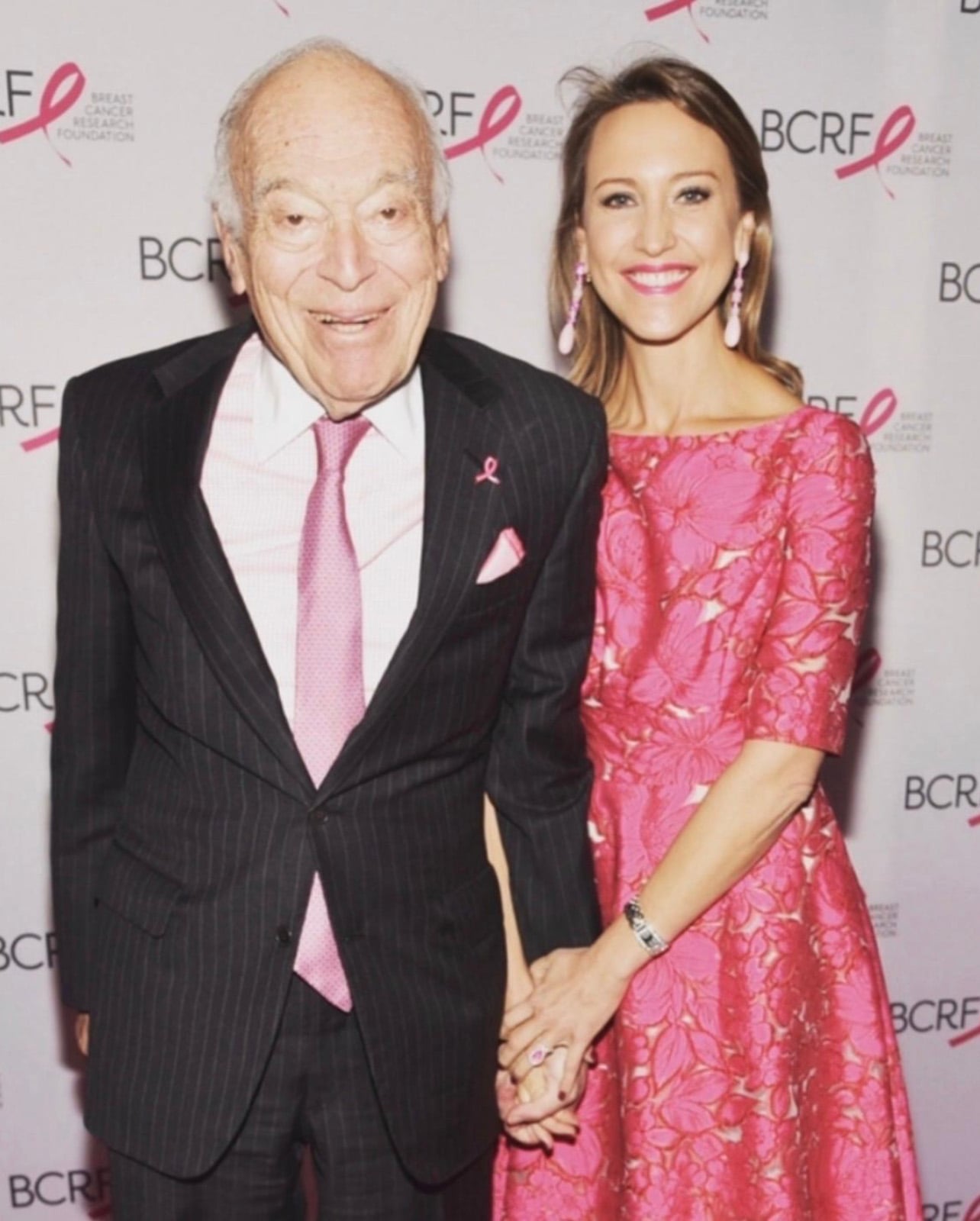
Lampert with her mentor, Leonard Lauder, at the BCRF Luncheon and Symposium in 2017.
Today, Eliana, an investing professional at L Catterton, is vice chair of BCRF’s advisory board, bringing a new generation—and perspective—to the organization her grandmother founded in 1993. Helping guide her is Kinga Lampert, BCRF’s Chairwoman Emerita, who was mentored by Evelyn and Leonard Lauder and became close to Evelyn after her own breast cancer diagnosis in 2005. “To think about that cycle, that they taught me philanthropy, and now here I am in this role with Eliana, is very beautiful and very rare,” Lampert says.
For Eliana, assuming greater responsibility at BCRF has never been simply about carrying a famous name. “It was really important to me that I provide value, that I wasn’t just a last name, a totem or a symbol of continuation.” Her focus is increasingly on two interconnected challenges: breast cancer’s troubling rise among younger women and cultivating a new generation committed to funding the research needed to understand it. For Eliana, whose own friends have now faced diagnoses, the mission has become intensely personal.
“My generation has to make these investments, not just for ourselves, but for our daughters and granddaughters,” she says. “It doesn’t feel like our grandmother’s disease anymore. I shouldn’t have to send my friends loaves of sourdough—not yet.” The mantle may have passed to a new generation, but the mission remains unmistakably Evelyn’s. As Lampert says of their bond, “There is an invisible thread, and we always find each other.”