By Shannon Adducci
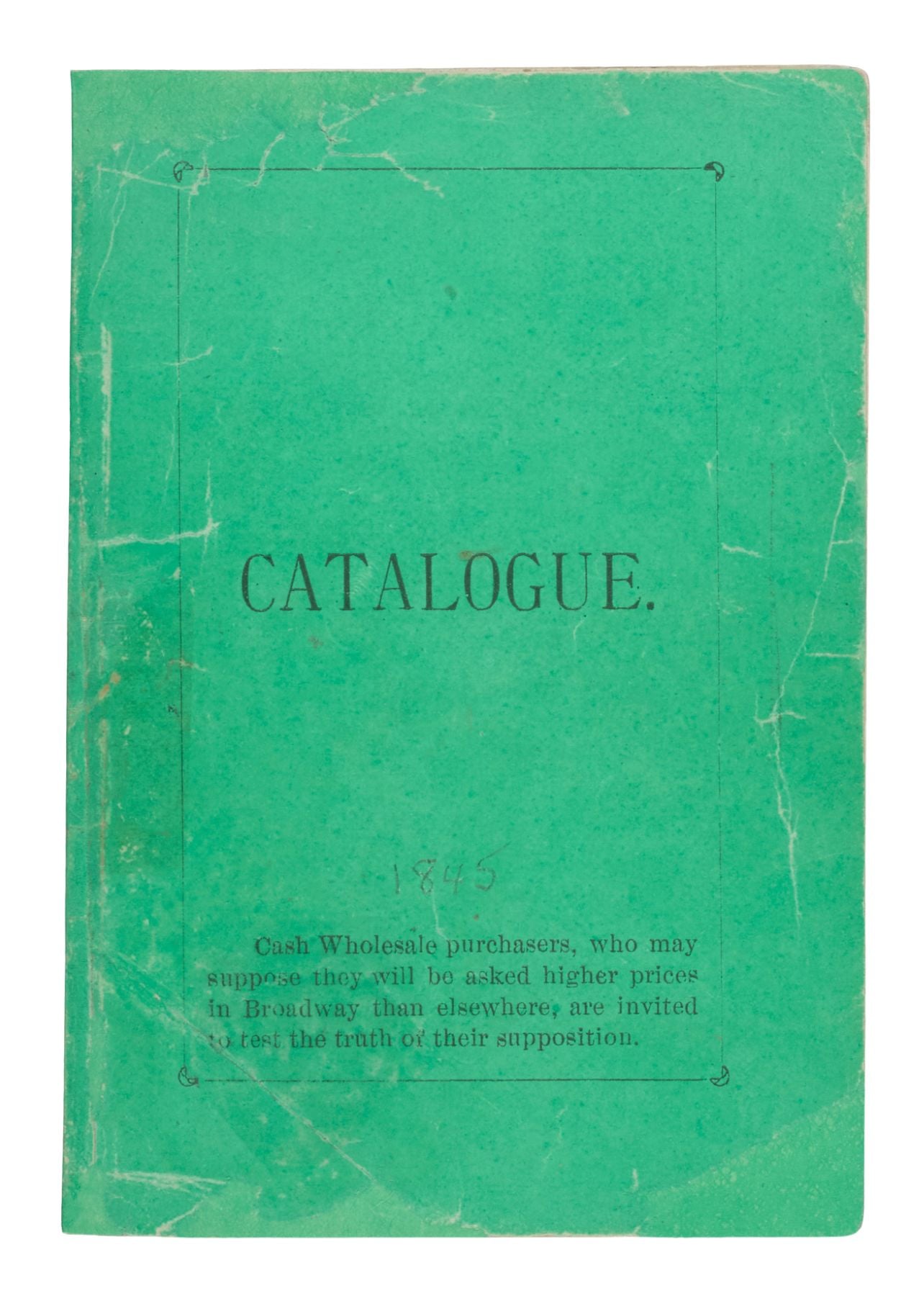
Charles Lewis Tiffany launches the first Blue Book, America’s first direct-mail catalogue. Early editions include everything from cutlery to curling irons.
As America’s first direct-mail catalogue, the Tiffany & Co. Blue Book has long held a certain cachet. Launched in 1845, eight years after cofounders Charles Lewis Tiffany and John B. Young opened their “stationery and fancy goods” emporium on lower Broadway in downtown Manhattan (it was then known as Tiffany, Young & Ellis), this first edition featured a precursor to “Tiffany Blue,” with a slight greenish tint on the famous hue. On the cover, it held the modest title of CATALOGUE, along with the following declaration: “Cash Wholesale purchasers, who may suppose they will be asked higher prices in Broadway than elsewhere, are invited to test the truth of their supposition.”
Fast forward to today, and the Blue Book still carries a kind of moxie. It is now the vessel for Tiffany’s high jewelry collections, a showcase of artistry and beauty in the combination of rare, important gems and the paramount of jewelry-making techniques. And, some of the earliest printed editions have even become collectors’ items in their own right.
For the past few collections, the Blue Book has looked back to the creations of Jean Schlumberger, the legendary French jewelry designer who worked at the house from 1956 until his death in 1987. His bold motifs and playful point of view helped to define the aesthetic of mid-century jewelry, and while his pieces have long been highly coveted, his work has seen a renewed resonance. That Schlumberger is only one of four designers Tiffany has allowed to engrave a signature on pieces proves the significance of his work to the brand’s 189-year heritage.
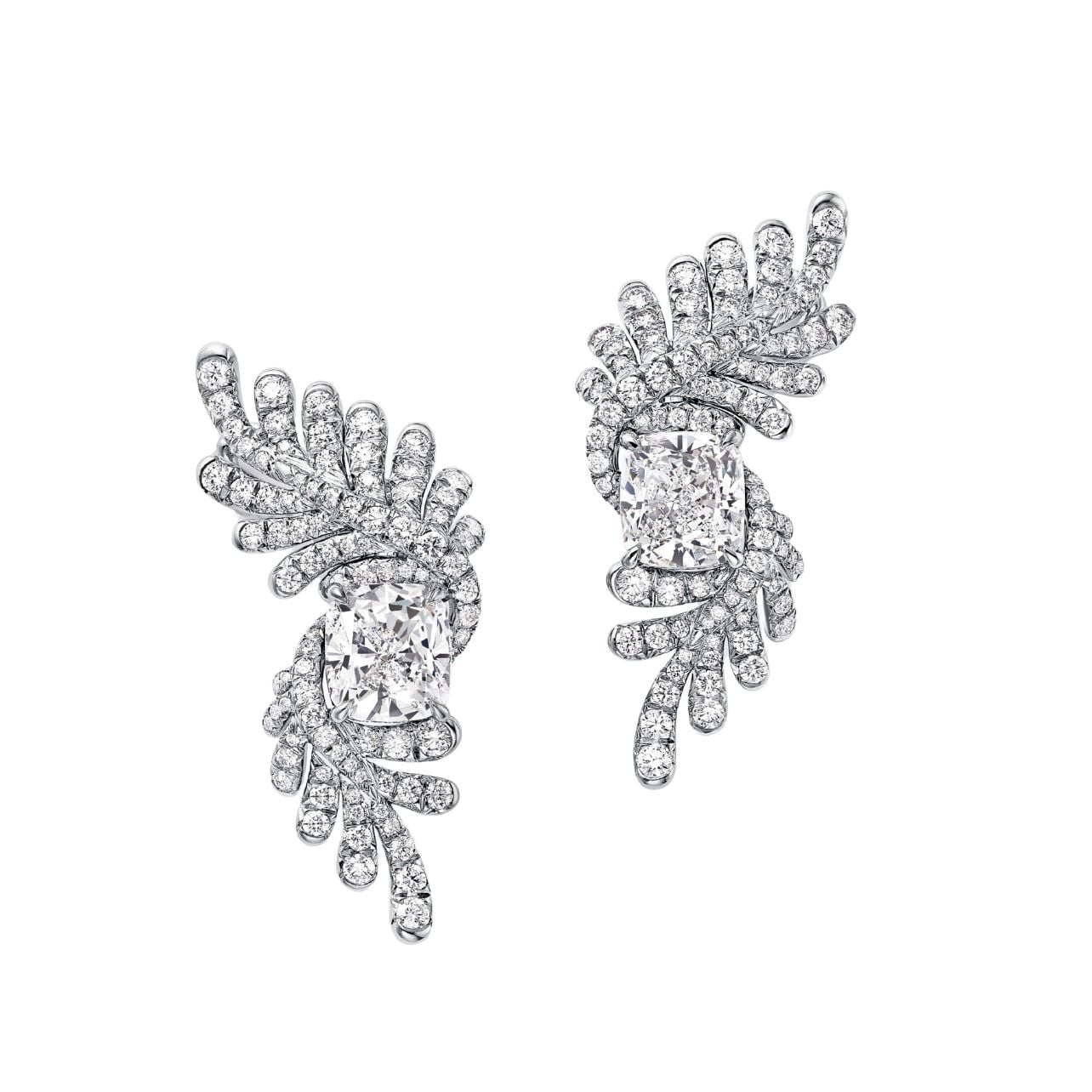
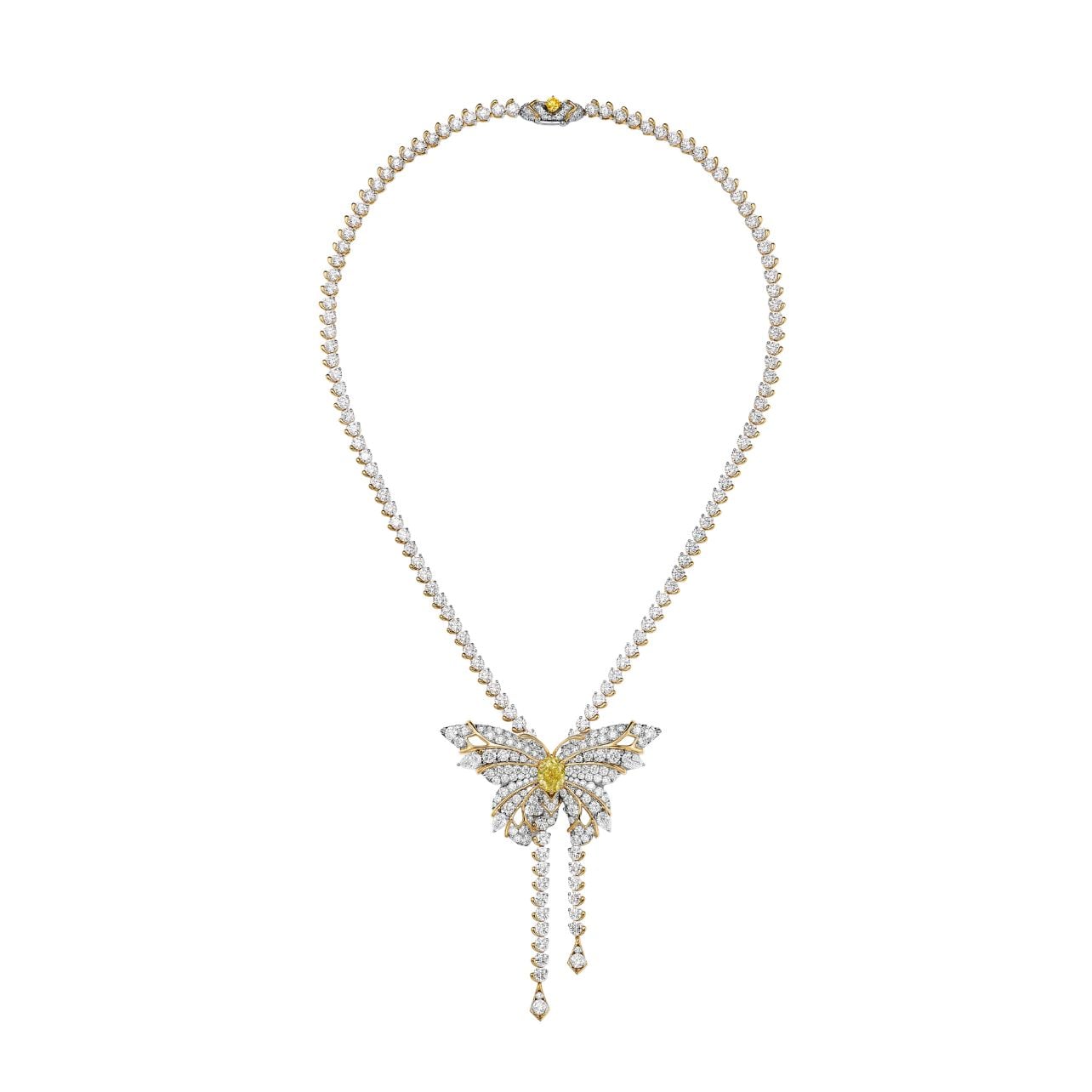
While past recent collections have explored various biological systems and habitats within Schlumberger’s repertoire (2023 and 2025 focused on all things oceanic, while 2024 collection featured celestial motifs), the Blue Book 2026: Hidden Garden brings Tiffany’s high jewelry back to some of the designer’s favorite flora and fauna. Designed by Senior Vice President and Chief Artistic Officer Nathalie Verdeille, in collaboration with the Tiffany Design Studio, the collection looks back to important motifs (some well known, others less discovered) from Schlumberger’s archives and reinterprets them in more abstract, sculptured, and innovative designs.
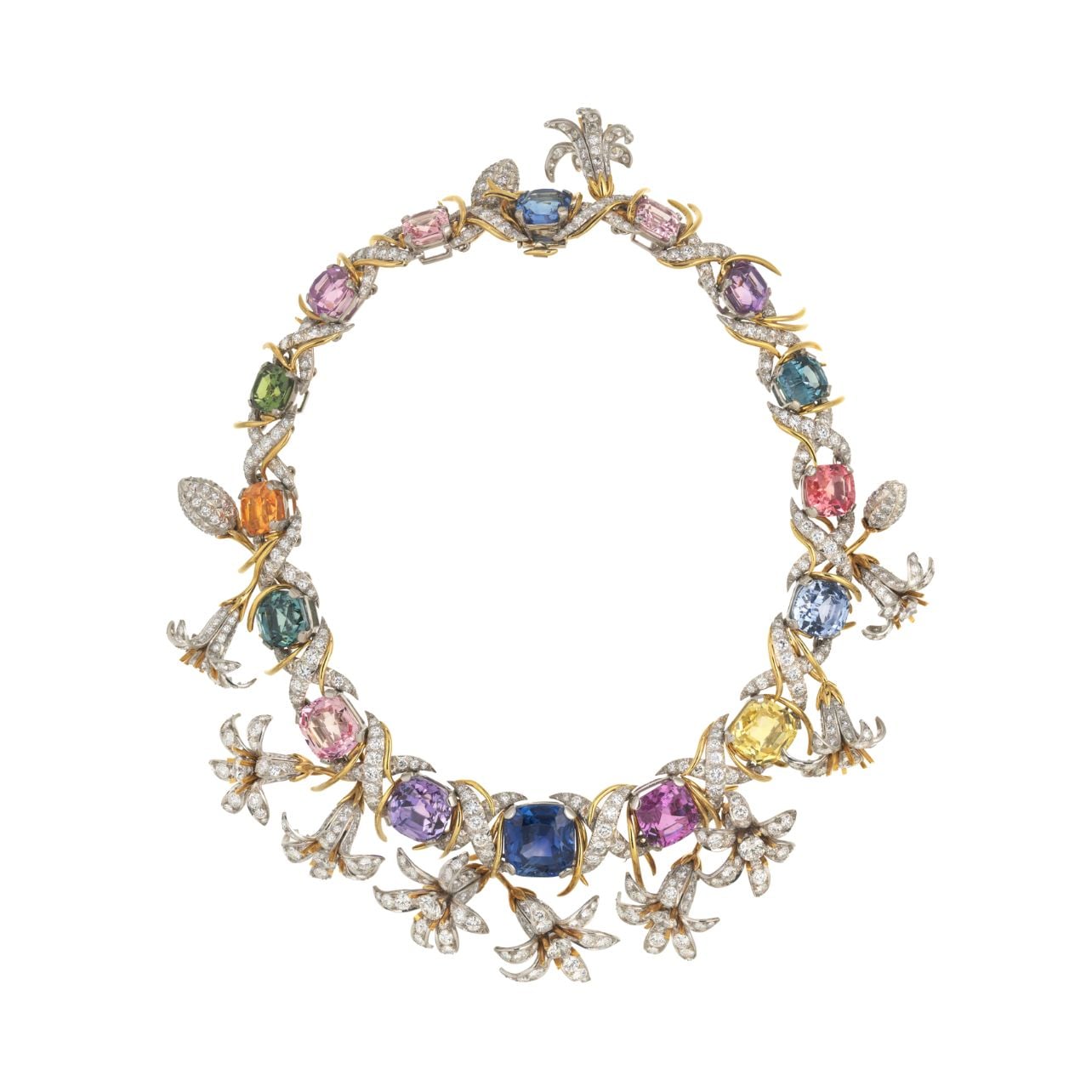
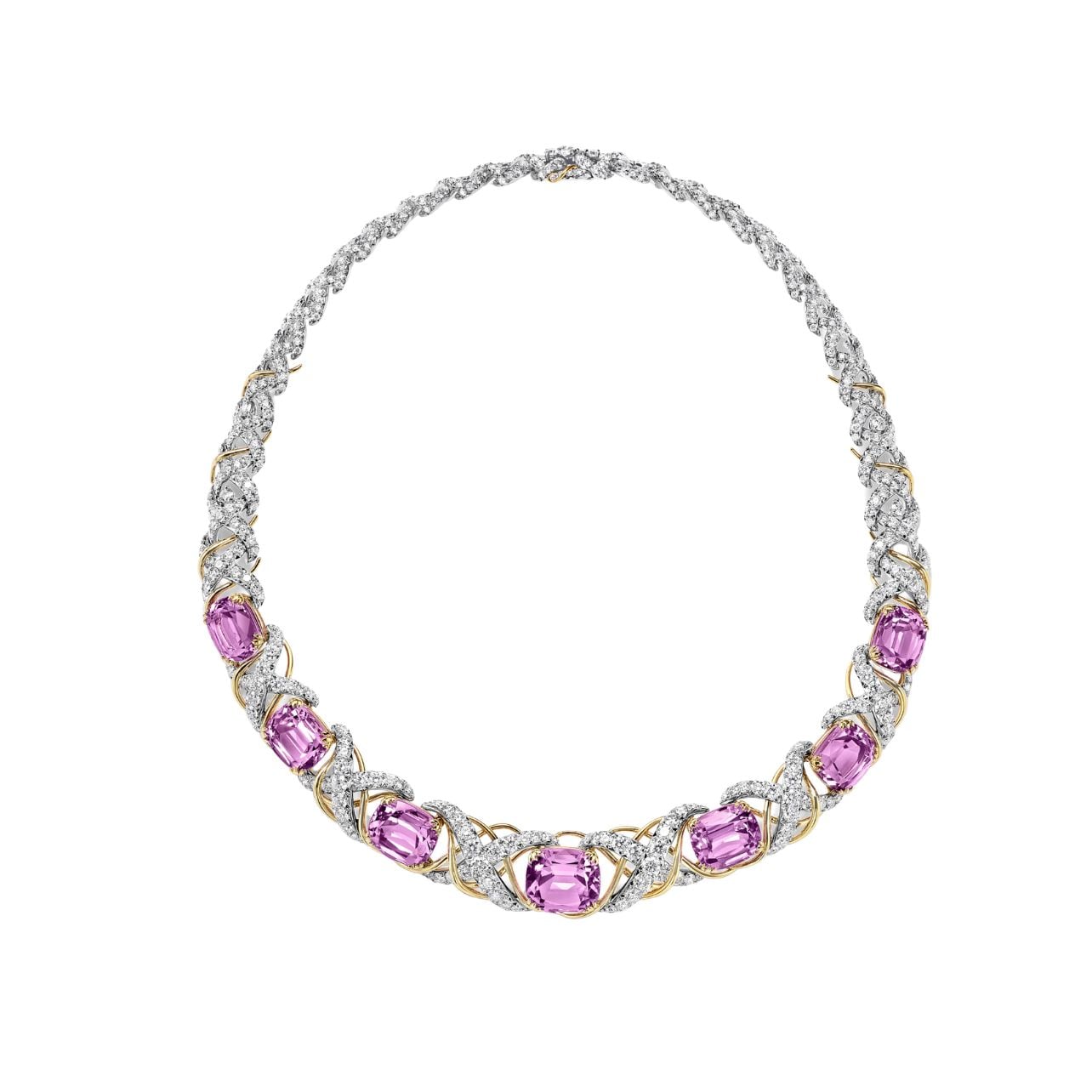
Take Jasmine, a floral design motif that Schlumberger developed around 1962, notably through a collier of cushion-cut multicolored sapphires with miniature sculpted and three-dimensional jasmine flowers in diamonds that dangle on articulated drops throughout the necklace. The floral design was used in a pair of platinum, diamond, and cushion-cut kunzite earrings, and the original necklace’s croissillon motif (“crosshatch” in French; a Schlumberger signature) was used for a new platinum-and-diamond statement necklace set with seven cushion-cut kunzites totaling more than 70 carats.
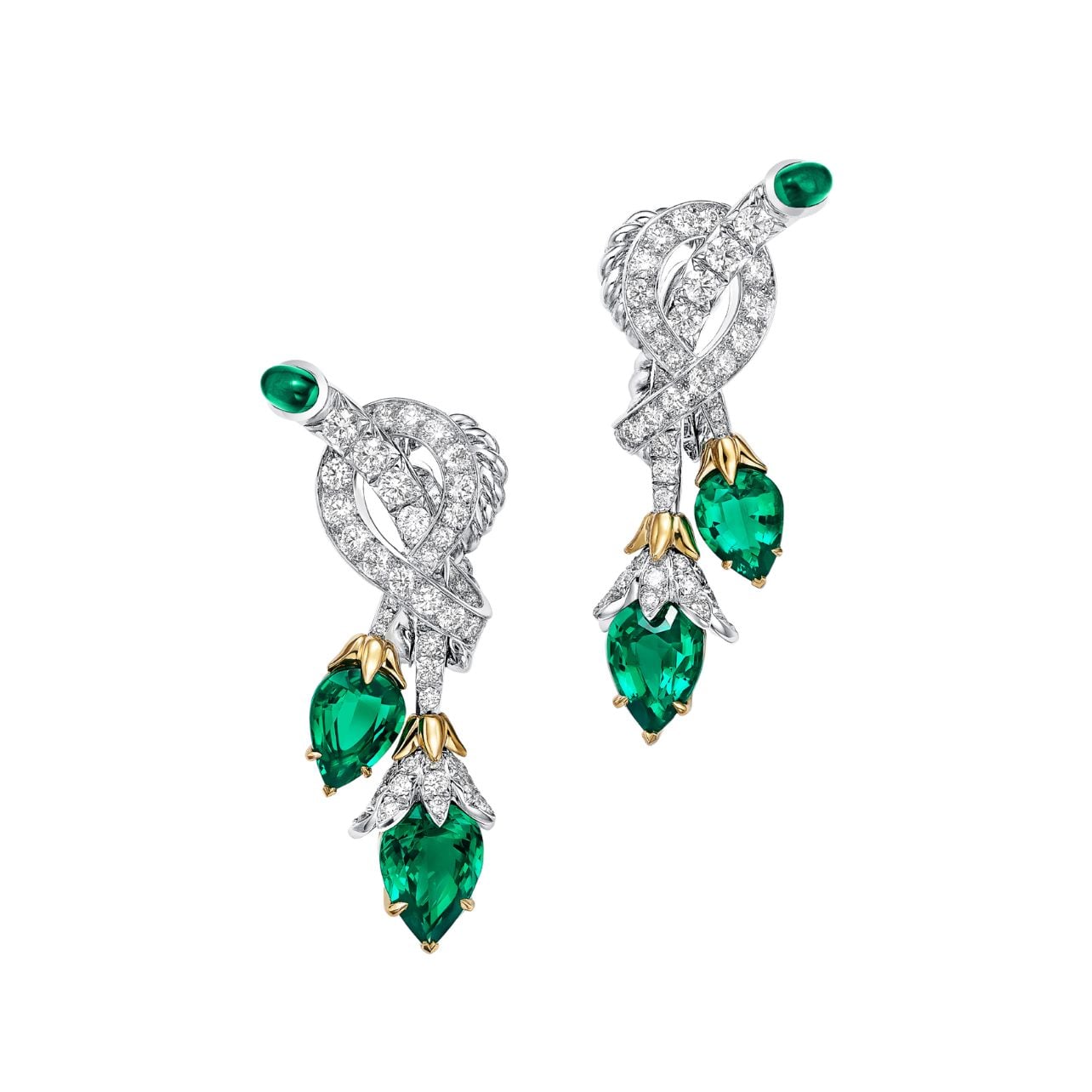
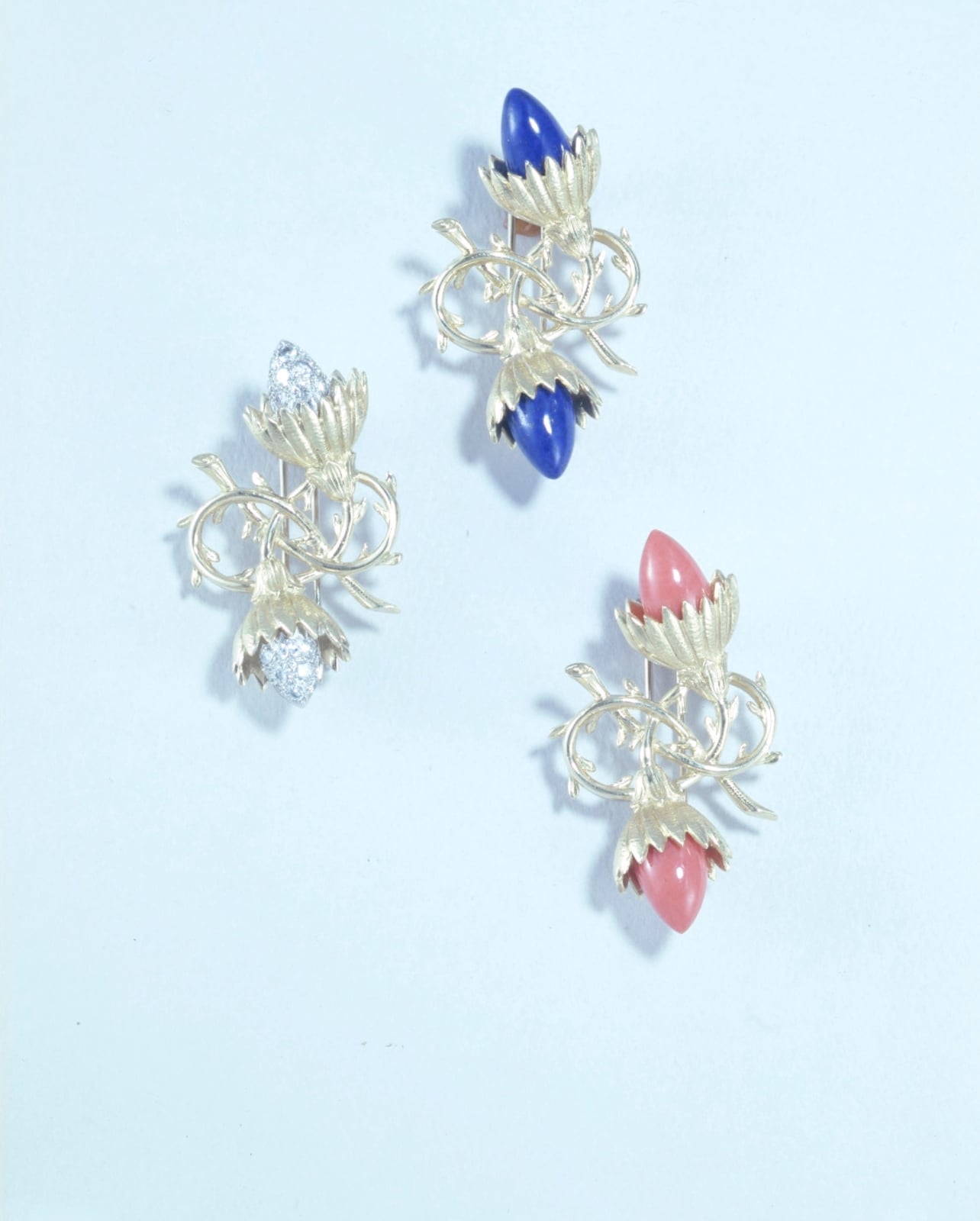
There’s also the Twin Bud motif, which Schlumberger developed in the 50’s, prior to joining Tiffany. A late ‘70s version from the brand shows an interlocking scroll of vines, done in yellow gold with tiny carved buds made of lapis lazuli, coral, and diamonds. In “Hidden Garden”, the design is done in intricate pavé diamond work with dimensional yellow-gold leaf layers and pear-shaped vivid unenhanced Zambian emeralds as the vibrant buds. Elsewhere, daisies, bees, Monarch butterflies, and abstract palm leaves from the Schlumberger archives have also been reinterpreted through statement earrings, necklaces, rings, bracelets, and brooches.
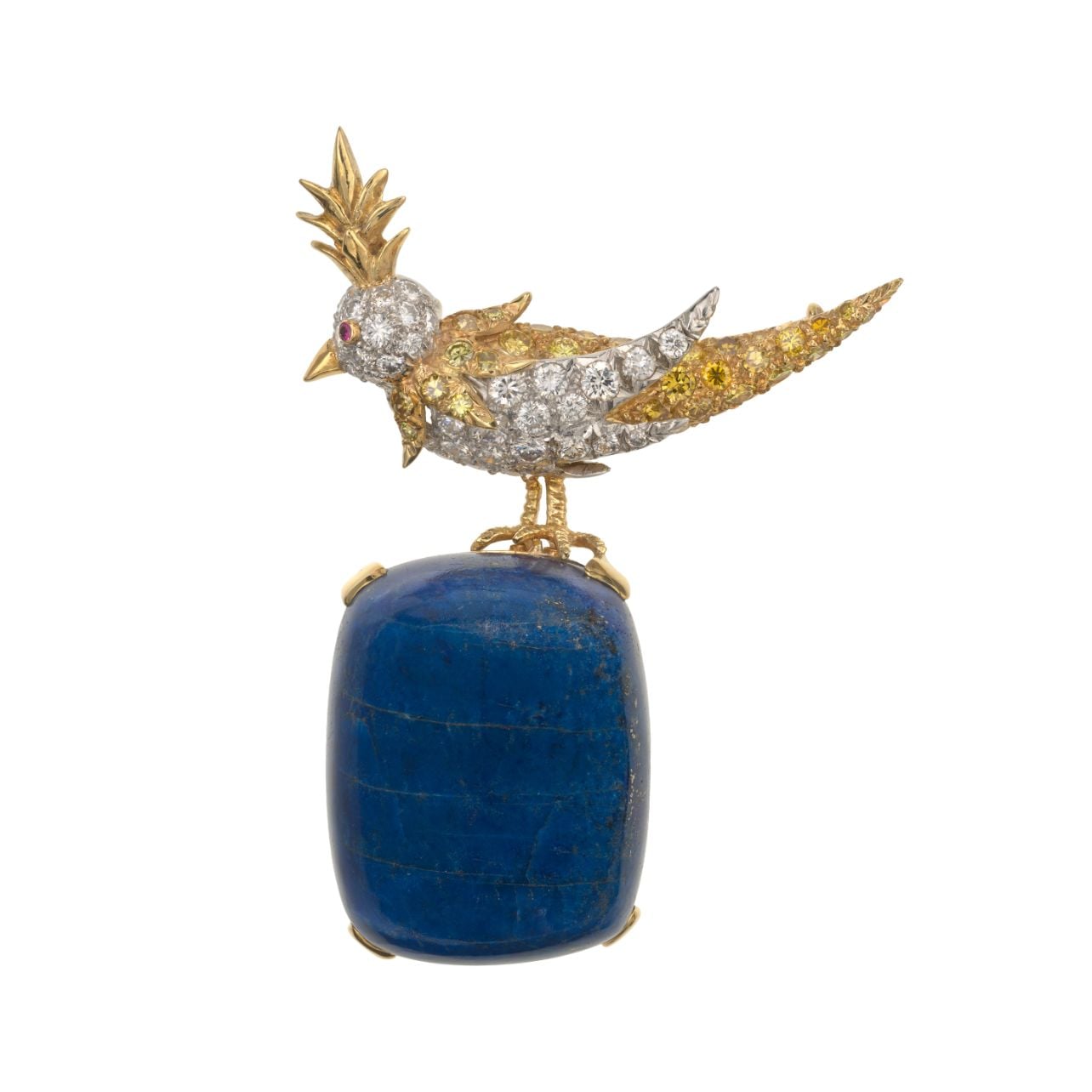
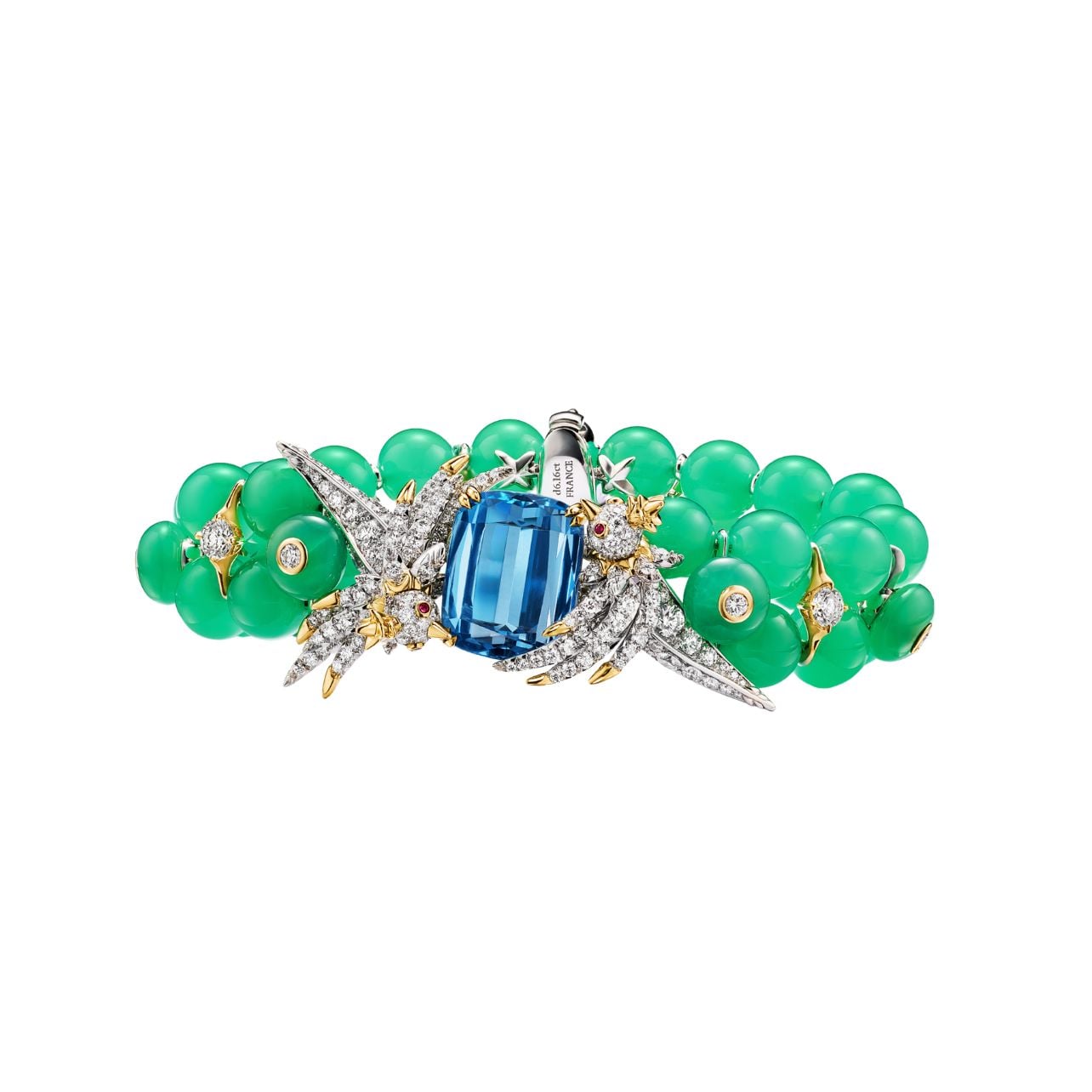
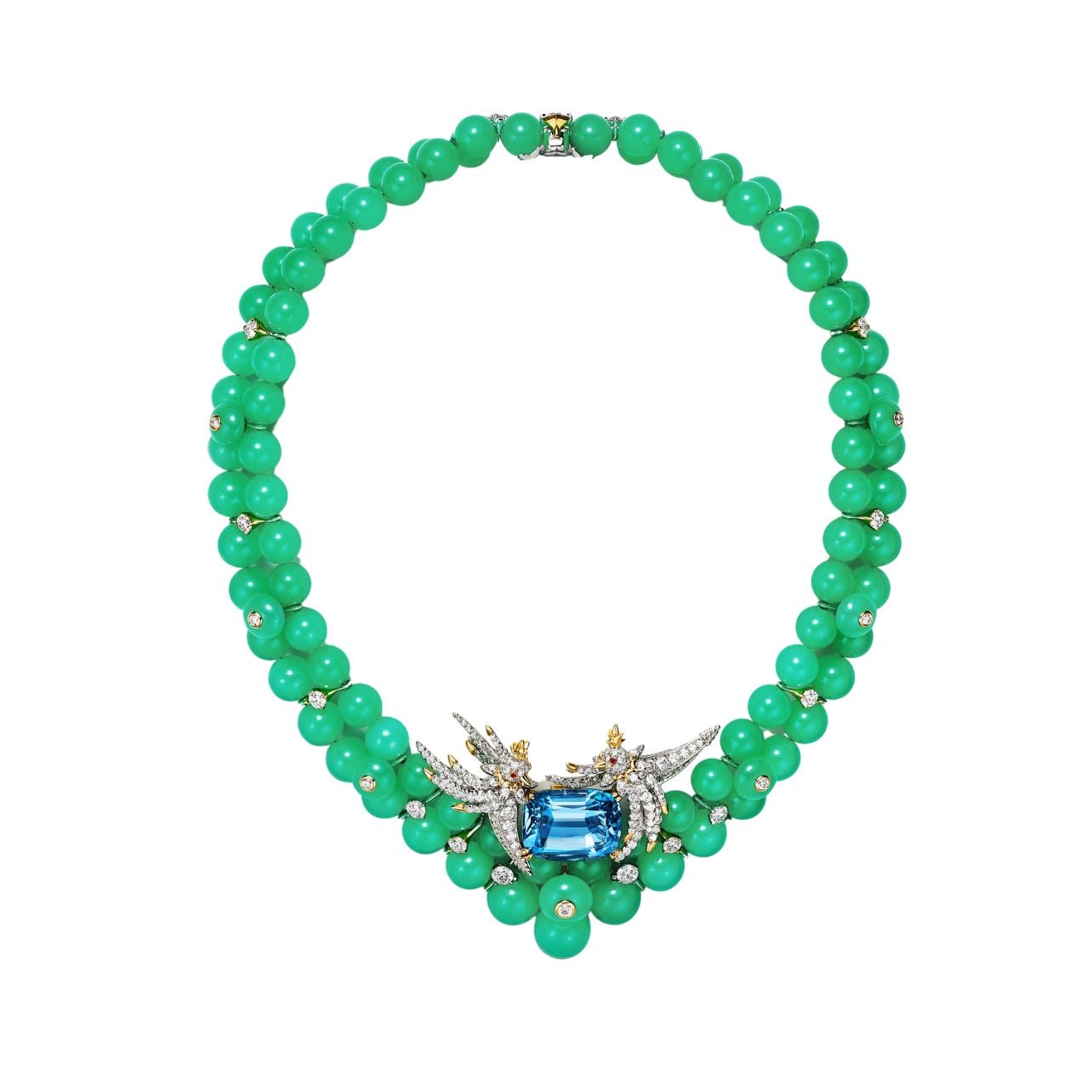
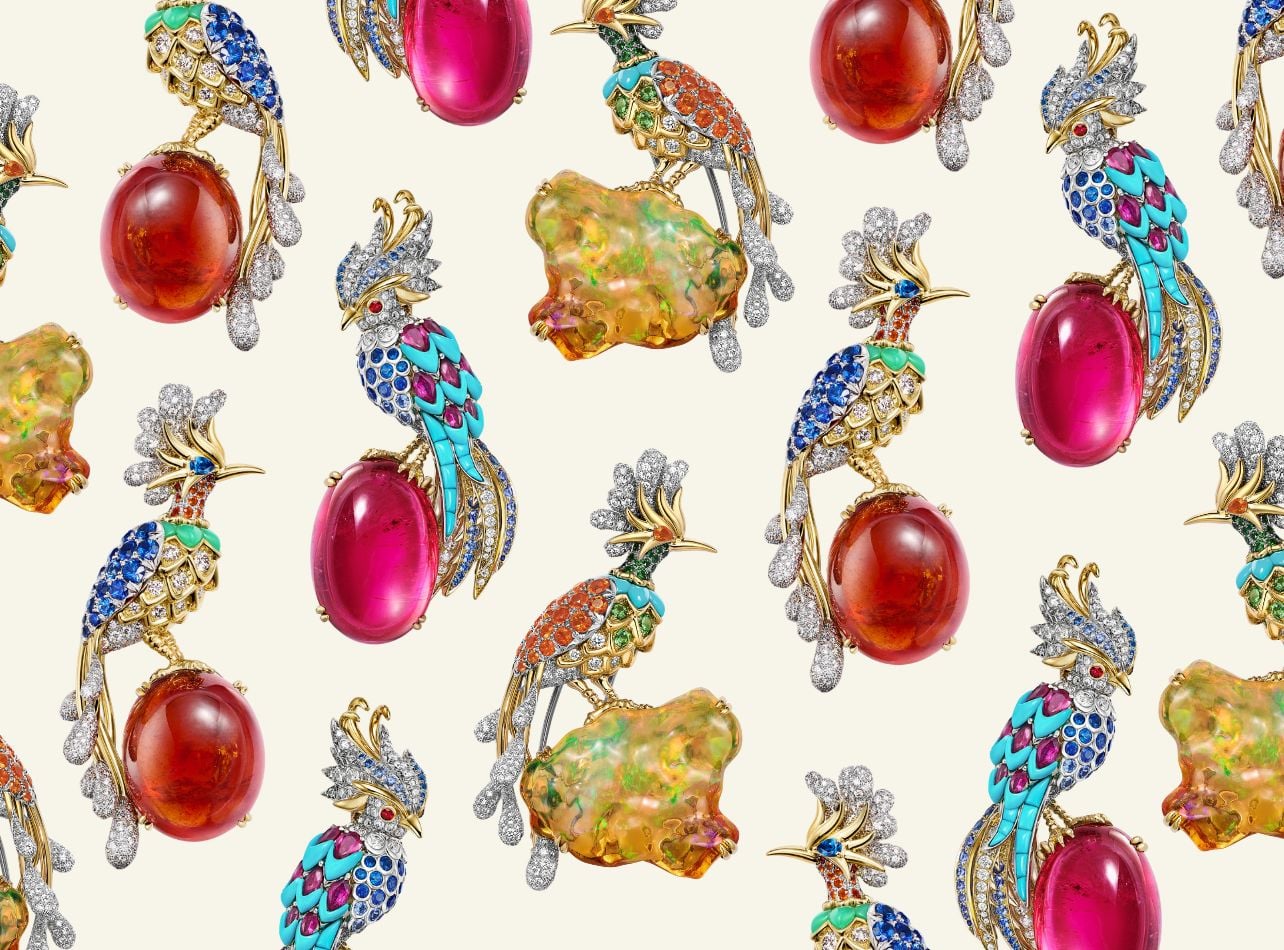
“Hidden Garden” also continues the brand’s exploration of Schlumberger’s most famous design: Bird on a Rock. Introduced in 1965 when Schlumberger created a custom piece for his friend, Tiffany client Bunny Mellon, it has long been the mascot of the brand, and recent collections have offered new visions of the piece through inventive uses of one-of-a-kind stones. In the new iteration, a bracelet and necklace suite with chrysoprase beads both feature the Bird on a Rock, the latter converting to a brooch with a 22-carat cushion-cut aquamarine. It’s a piece that mightily sums up so much of Tiffany’s history, in color, symbolism, and with gusto.
All images courtesy of Tiffany & Co and The Tiffany Archives