By Kat Herriman
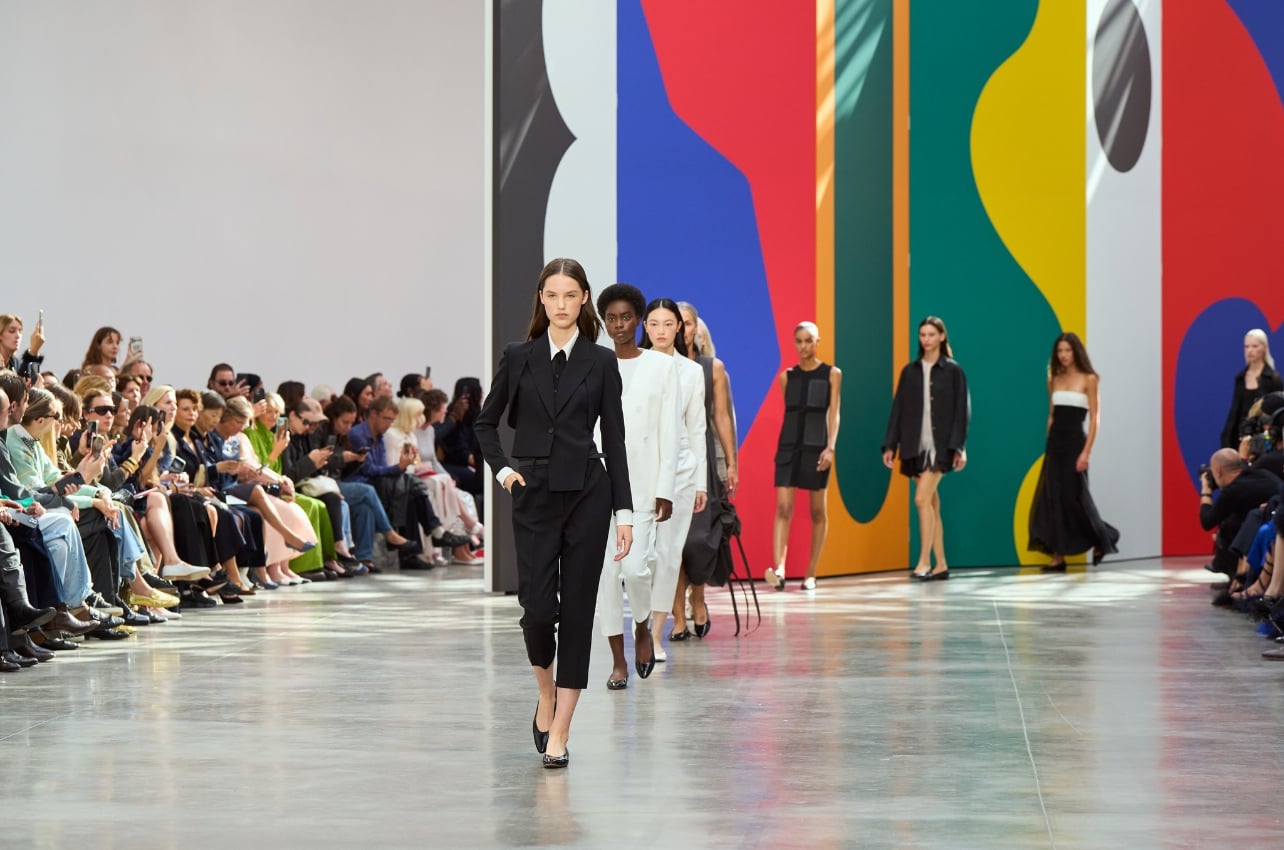
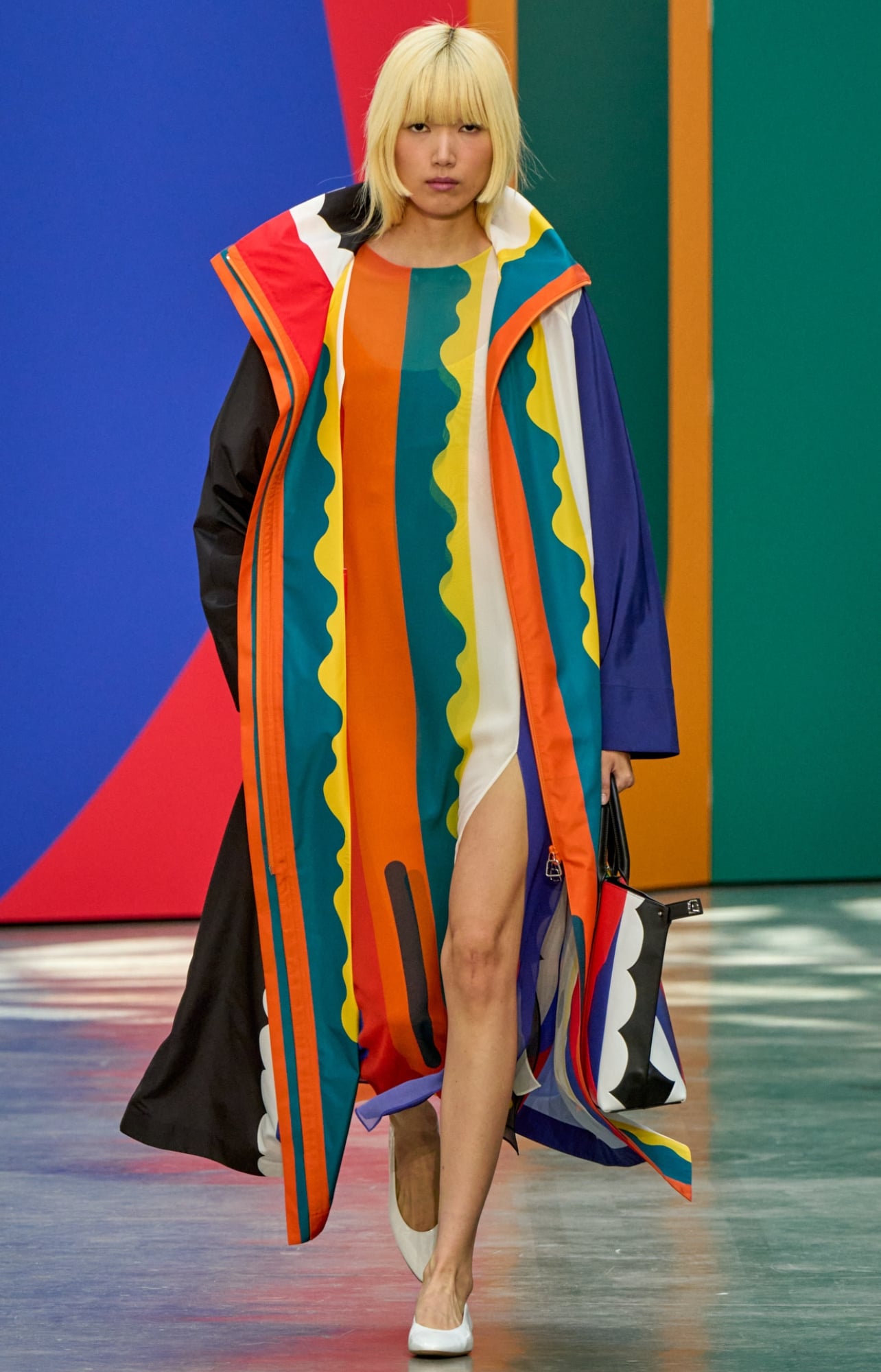
At Akris’s Spring/Summer 26 show, artist Leon Polk Smith’s “Seven Involvements in One” (side 1 of 2), 1966, took center stage.
When Akris Creative Director Albert Kriemler feels his creative battery flicker, he turns to the rhythms of his hometown, St. Gallen: long hikes in the surrounding mountains and afternoons spent in the glow of the local arthouse cinema. The former Kriemler chalks up to Swiss DNA, yet the latter feels equally Swiss in its preference for the independent and avant-garde. Together, they embody a distinctively artistic sensibility that has long informed Akris, the house—founded by his grandmother, Alice Kriemler-Schoch—that he has led for the past 45 years.
These days every fashion brand seems to be talking about independent theater and art, authenticity and luxury’s entanglements, collaborations between worlds. Akris has long treated such endeavors not as a revenue tactic but as everyday practice. Under Kriemler, the more than 100-year-old house has cultivated relationships with artists and architects—among them Carmen Herrera, Thomas Ruff, Sou Fujimoto, and Alexander Girard—well before such exchanges became another form of currency within the industry. These partnerships are never decorative: They are embedded into the making of the clothes themselves, shaping fabric development, construction, and proportion.
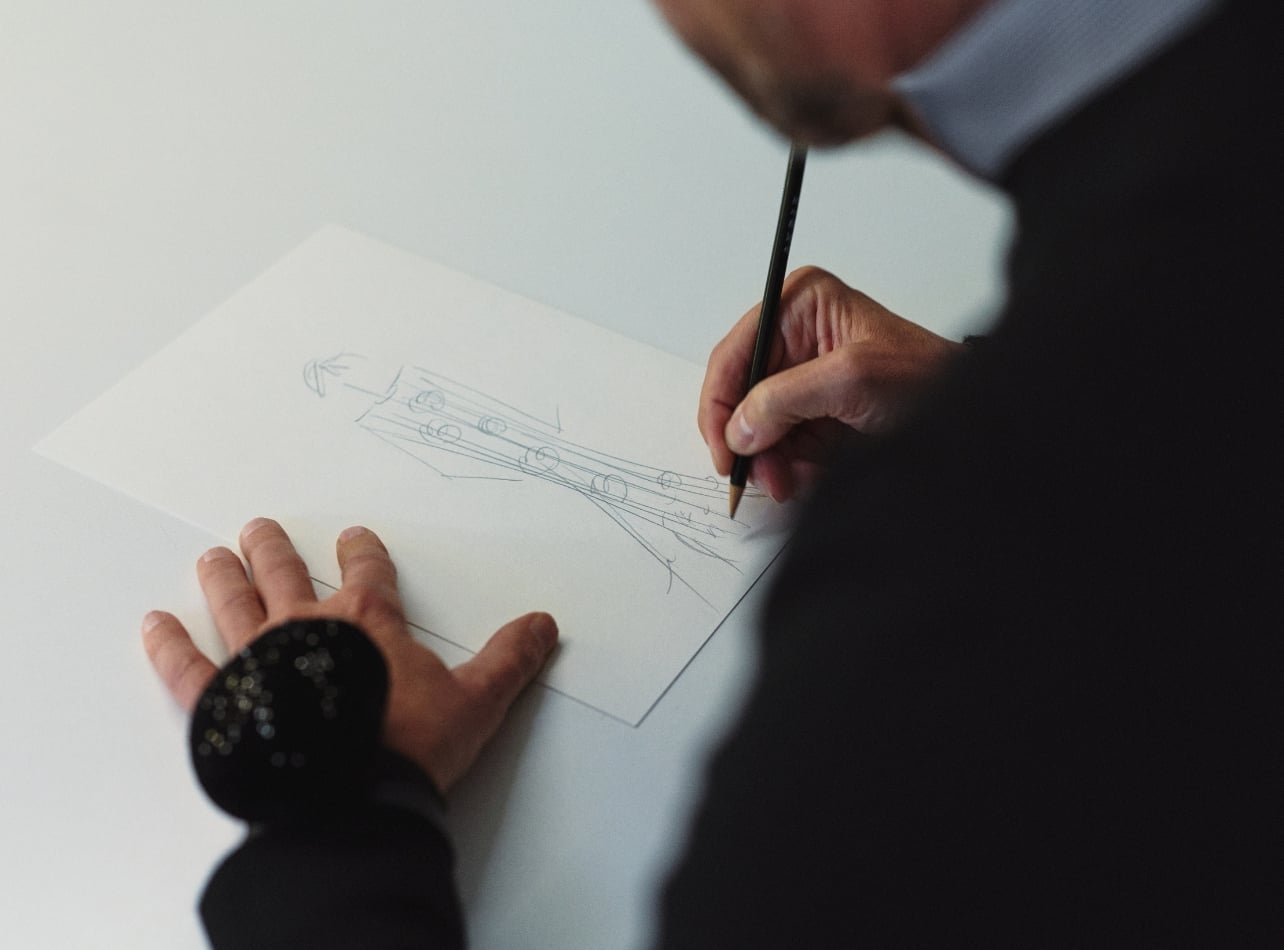
Creative Director Albert Kriemler sketching a look for the S/S collection.
That philosophy feels especially resonant as Akris prepares to release its Spring/Summer 2026 collection, in dialogue with the Leon Polk Smith Foundation. A central figure in postwar American abstraction, Smith employed a singular visual vocabulary defined by hard-edged geometry, asymmetry, and an almost musical use of color. Working largely outside the dominant New York School narrative, he forged a path that was at once rigorous and intuitive, precise and deeply personal. His paintings resist hierarchy: forms hover, advance, and recede, never fully resolving, yet always in balance. It is precisely this tension between structure and freedom that makes Smith such a compelling interlocutor for Akris, as well as their shared If-You-Know-You-Know status.
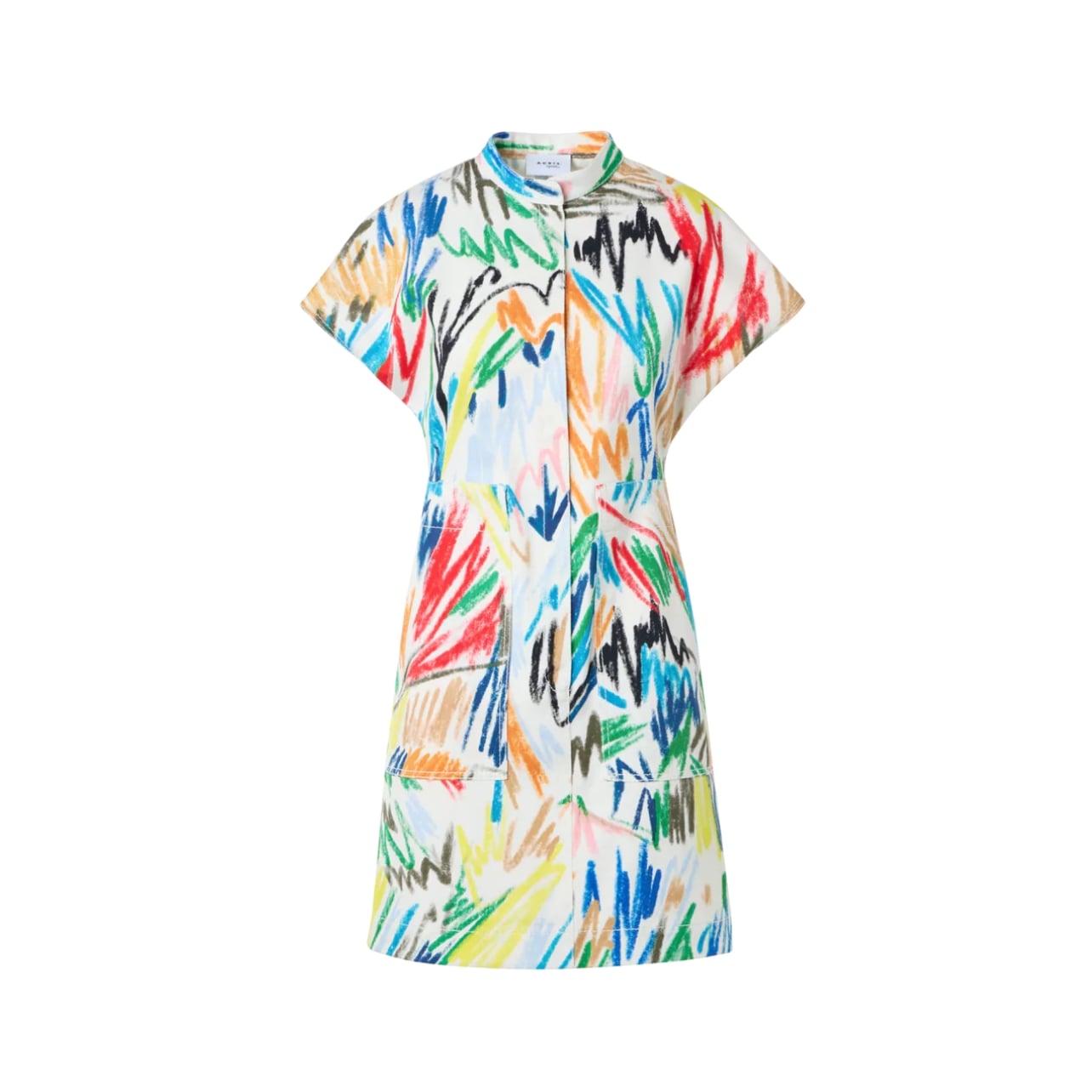
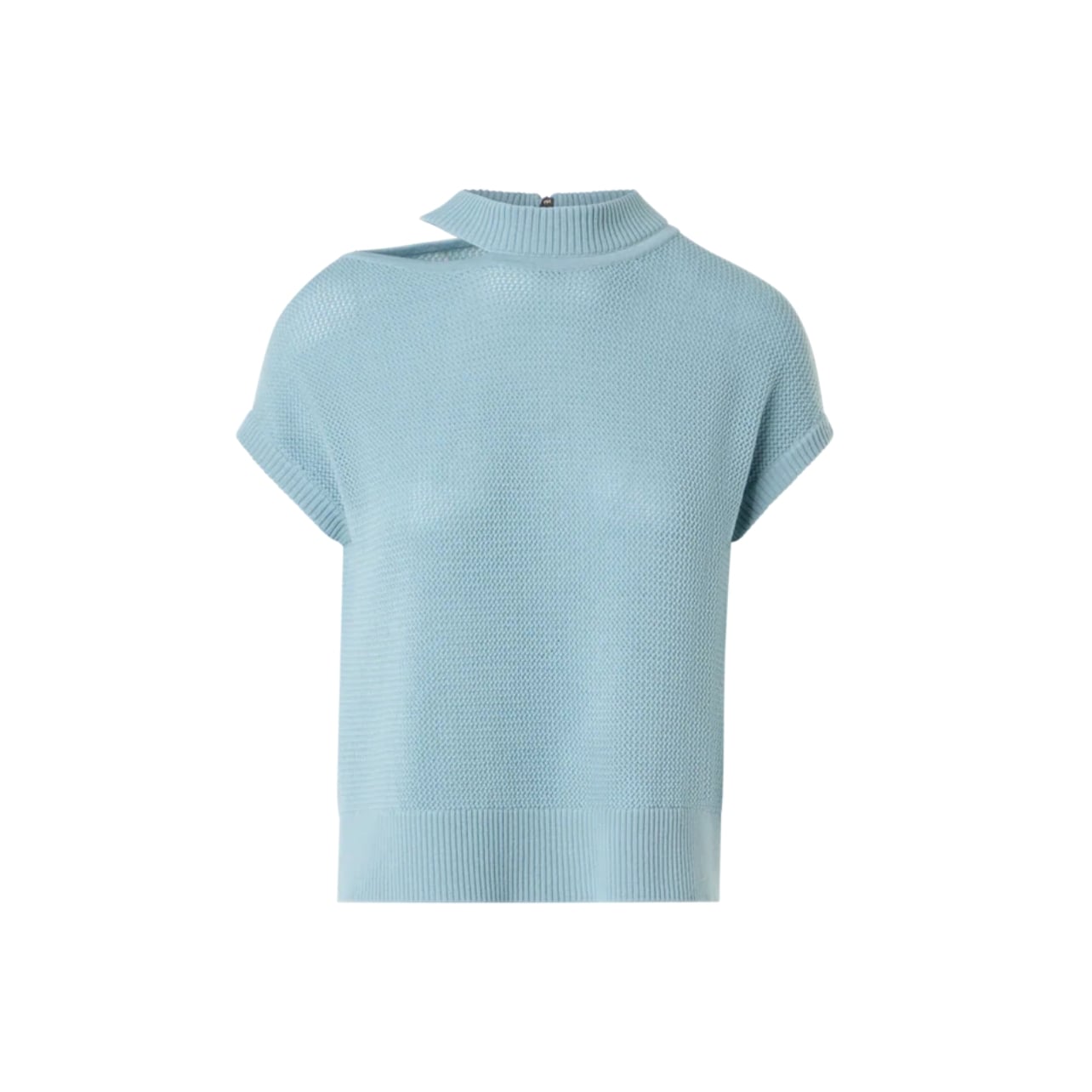
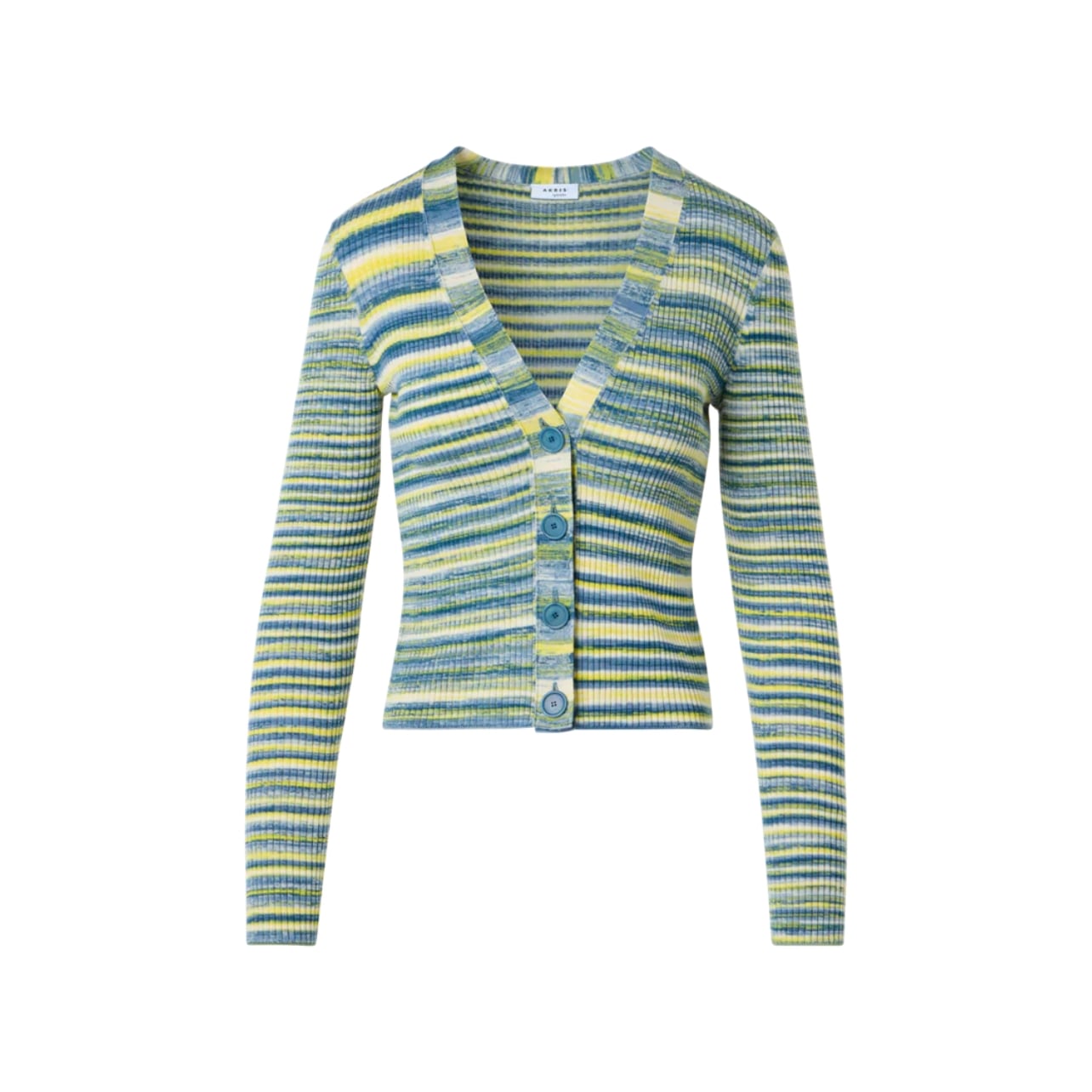
For Kriemler, whose design language is built on restraint, architectural clarity, and technical excellence, researching Smith’s work offered not a motif to be applied, but a way of thinking about composition, space, and movement that aligned with his own experimentation. The connection between the two is less about visual quotation than shared values: an insistence on integrity, a devotion to expertise, and a belief that abstraction can be deeply human. Ahead of the collection’s arrival in stores, we paused to ask Kriemler about this latest collaboration, as well as where his own creative process begins.
For readers less familiar with the work of Leon Polk Smith, how would you describe it, and what about it drew you to use it as a point of departure for Spring/Summer 2026?
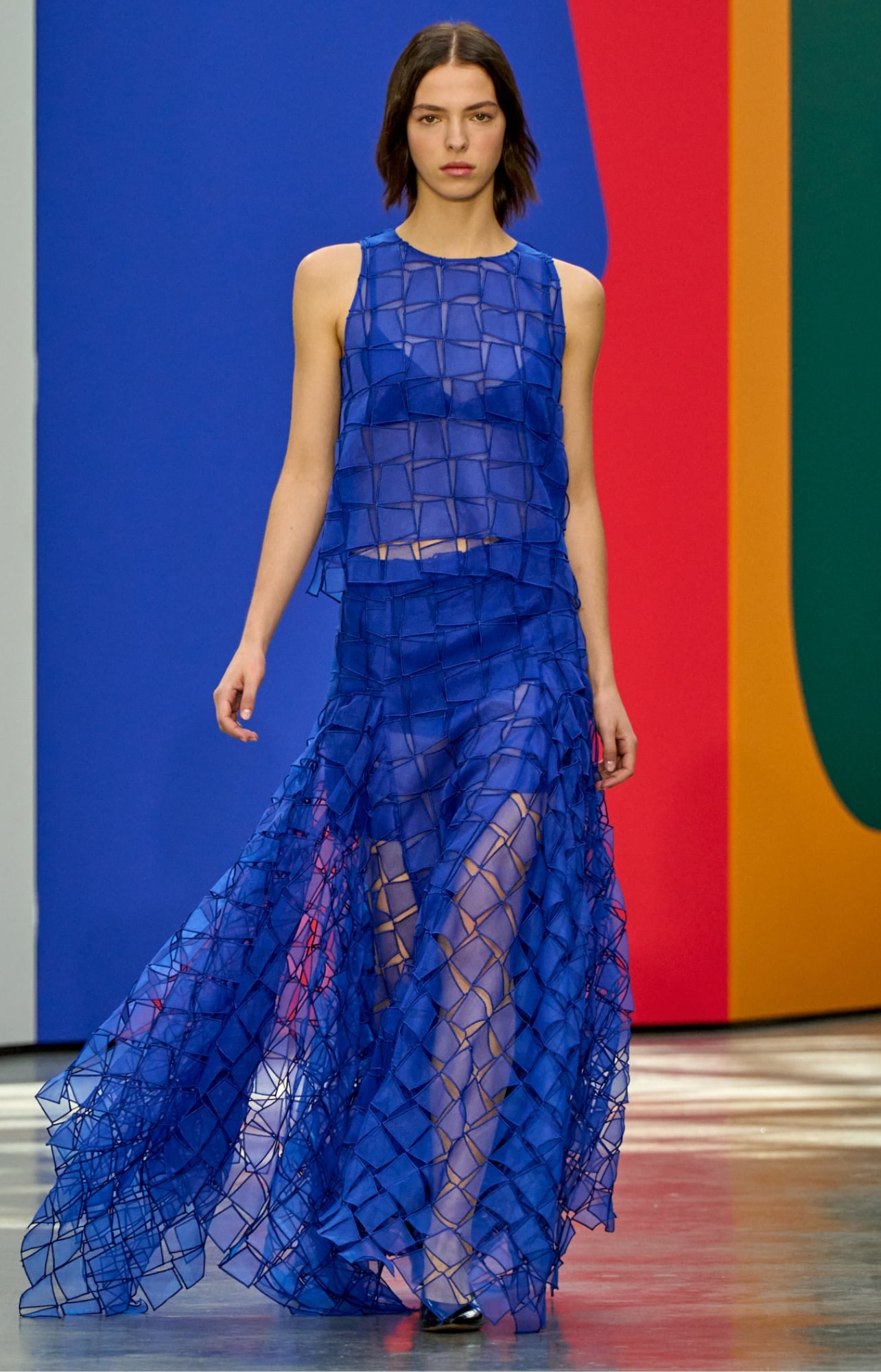
What fascinates me about Leon Polk Smith is his radical simplicity. A few essential decisions—line, shape, and color—create work that feels incredibly present. His color pairings, especially, stunned me; each “color correspondence,” as he called his two-colored works, feels surprisingly new. I also love that for him, everything begins with the line. That became the starting point for a collection focused on cuts and geometric lines.
You and Smith have both balked at the idea of being called minimalists, yet both of your bodies of work seem to be invested in exploring things like simplicity and repetition. Can you delve a bit into this paradox?
I always insist: I’m not a minimalist. My fabrics—cashmere, silk, and denim—are maximal. Minimalism is often perceived as strict, reduced, or cold, and for me that idea is too limited. It’s about using form and fabric to bring the person into light, and about focusing on essentials in order to refine them further.
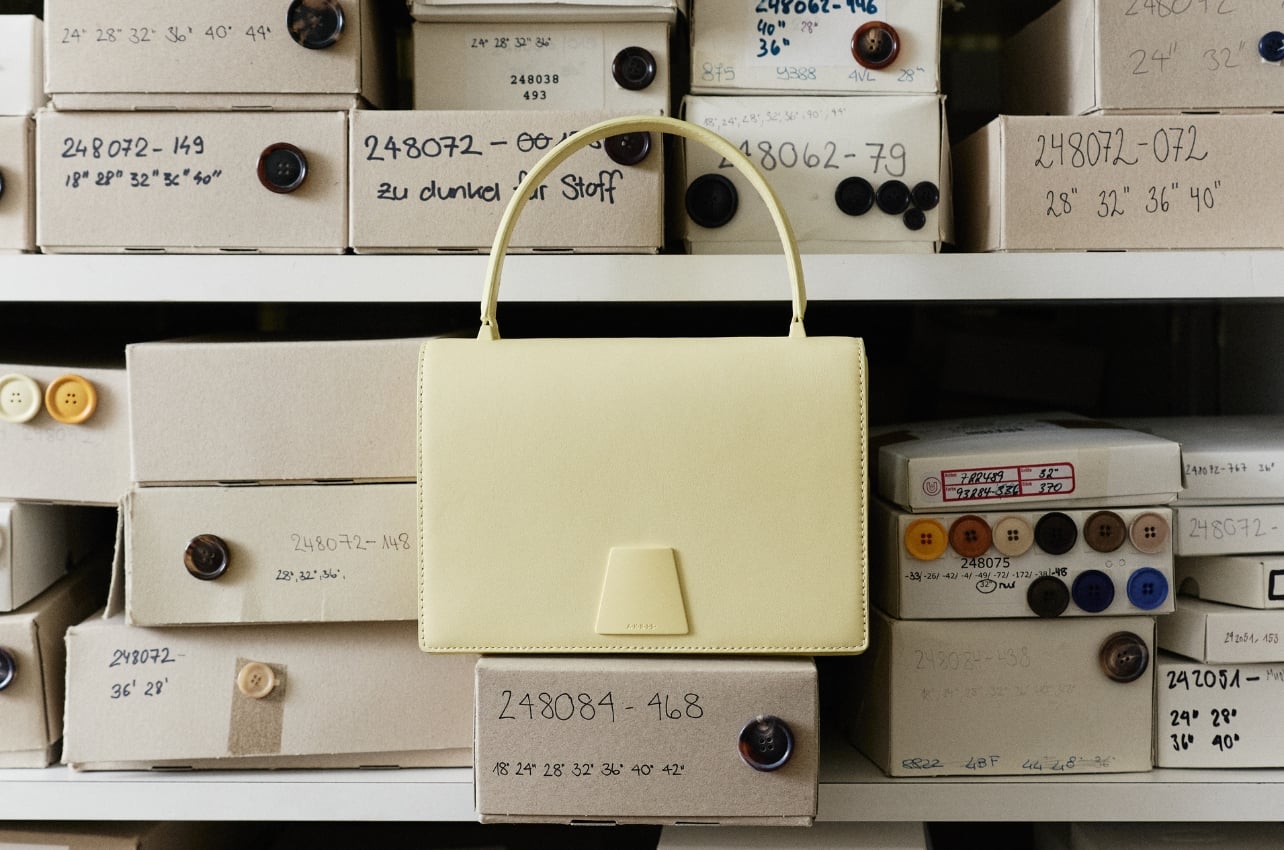
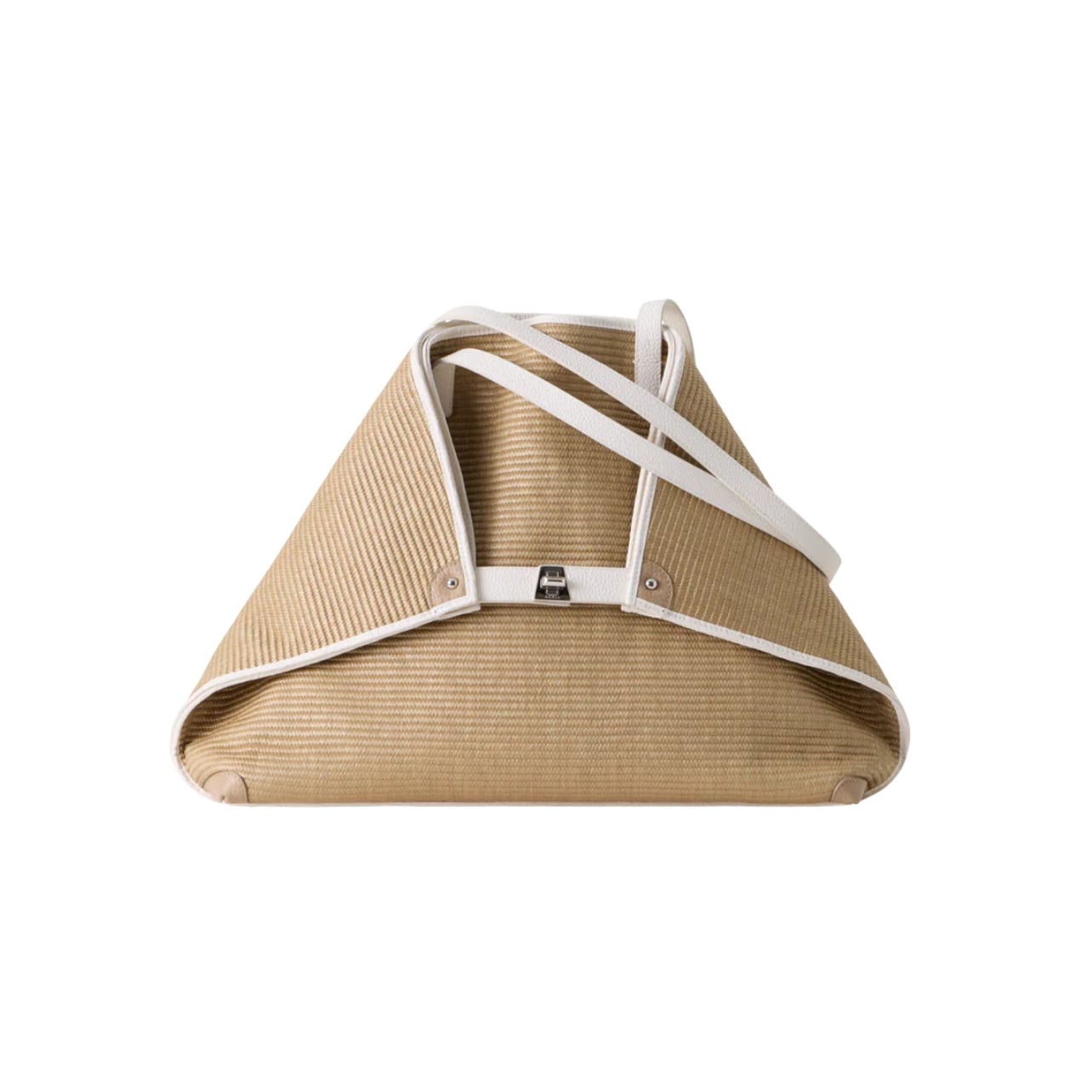
The new Alice bag set against boxes of buttons.
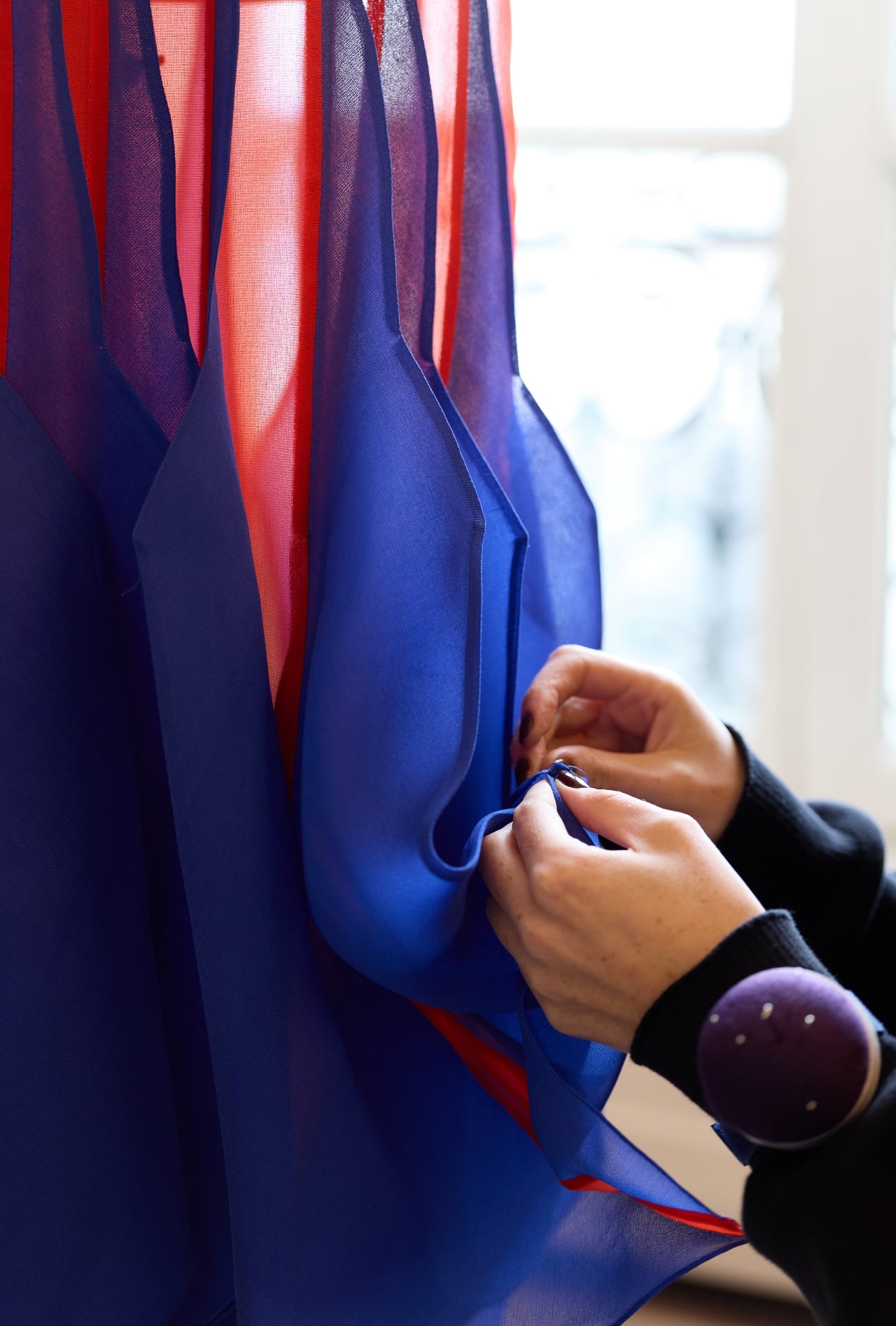
At the St. Gallen studio, a look from the Spring collection, in progress.
The trapezoid has become a hallmark of Akris, rooted in references to the apron, architecture, and proportion. How does that shape evolve beyond recognition into three dimensions?
I’ve always been fascinated by how something so architectural could feel light. This season, it finally transforms into something almost weightless: organza embroidered like a floating collage of trapezoids, developed with [celebrated embroidery company] Forster Rohner in St. Gallen.
A perfect segue for my next question, which is about fabric: Materials seem to play a central role at Akris. What was the starting point for this collection?
Fabric is where every collection begins. Here, it started with denim, the most utilitarian material, elevated through color. The idea was a pairing that feels surprisingly chic in Leon Polk Smith’s vibrant palette. What I love about double denim is that it works like a suit. It creates the same sense of being put-together: intentional, but still casual.
After more than a century of Akris, how do you balance the need to evolve without losing the house’s unique point of view?
In fashion, a personal signature and point of view are essential. You must cultivate your own language while continuing to evolve. For us, craft is at the core of everything we do, but craft only has meaning if it moves forward. It’s not about exclusivity or nostalgia. It’s about going back to the roots and using that foundation to create something modern. That’s how heritage stays relevant.
All images courtesy of Akris