By Janelle Zara
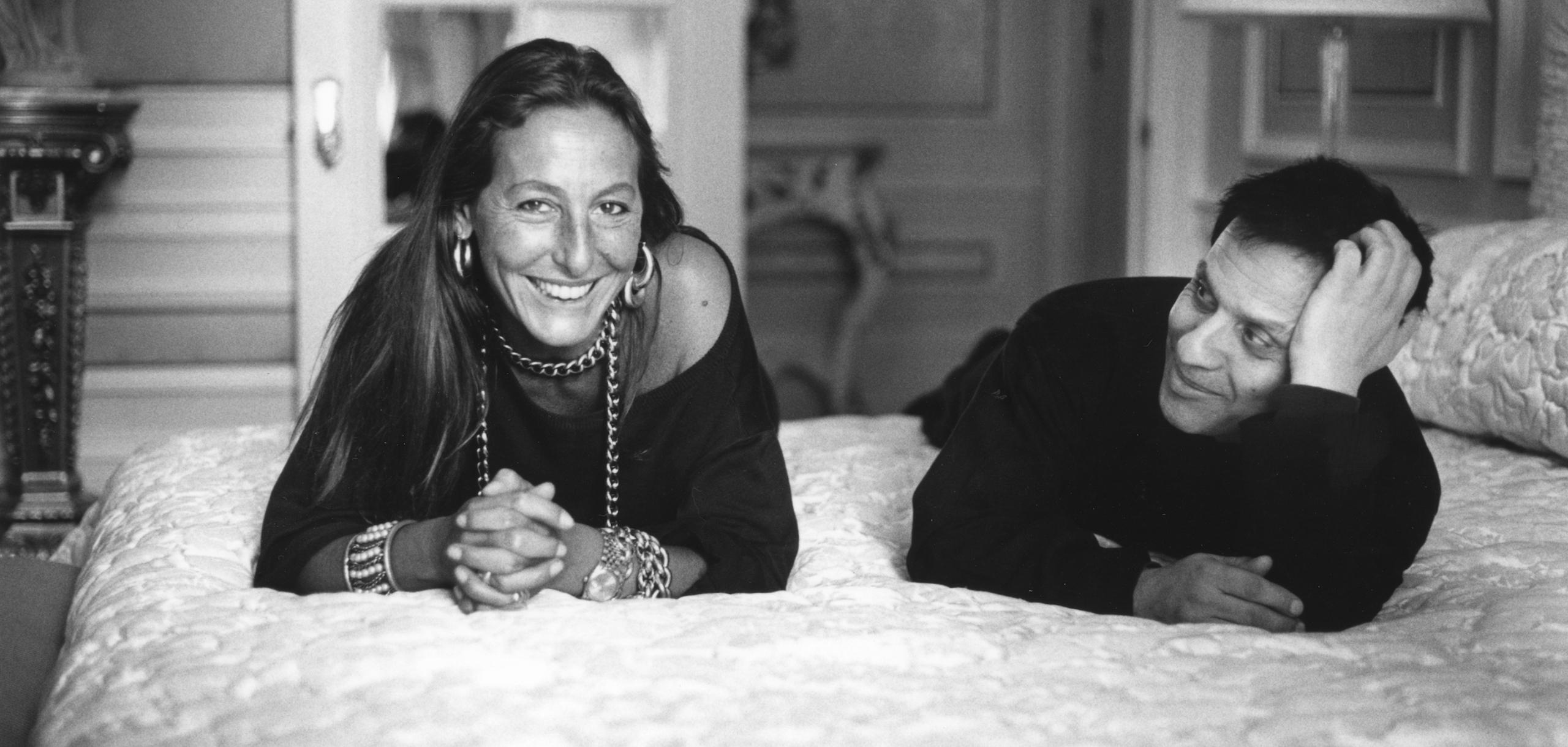
From the new book, “Alaïa Afore Alaïa,” Carlyne Cerf de Dudzeele and Azzedine Alaïa, New York, 1984. Available now at Books & Books.
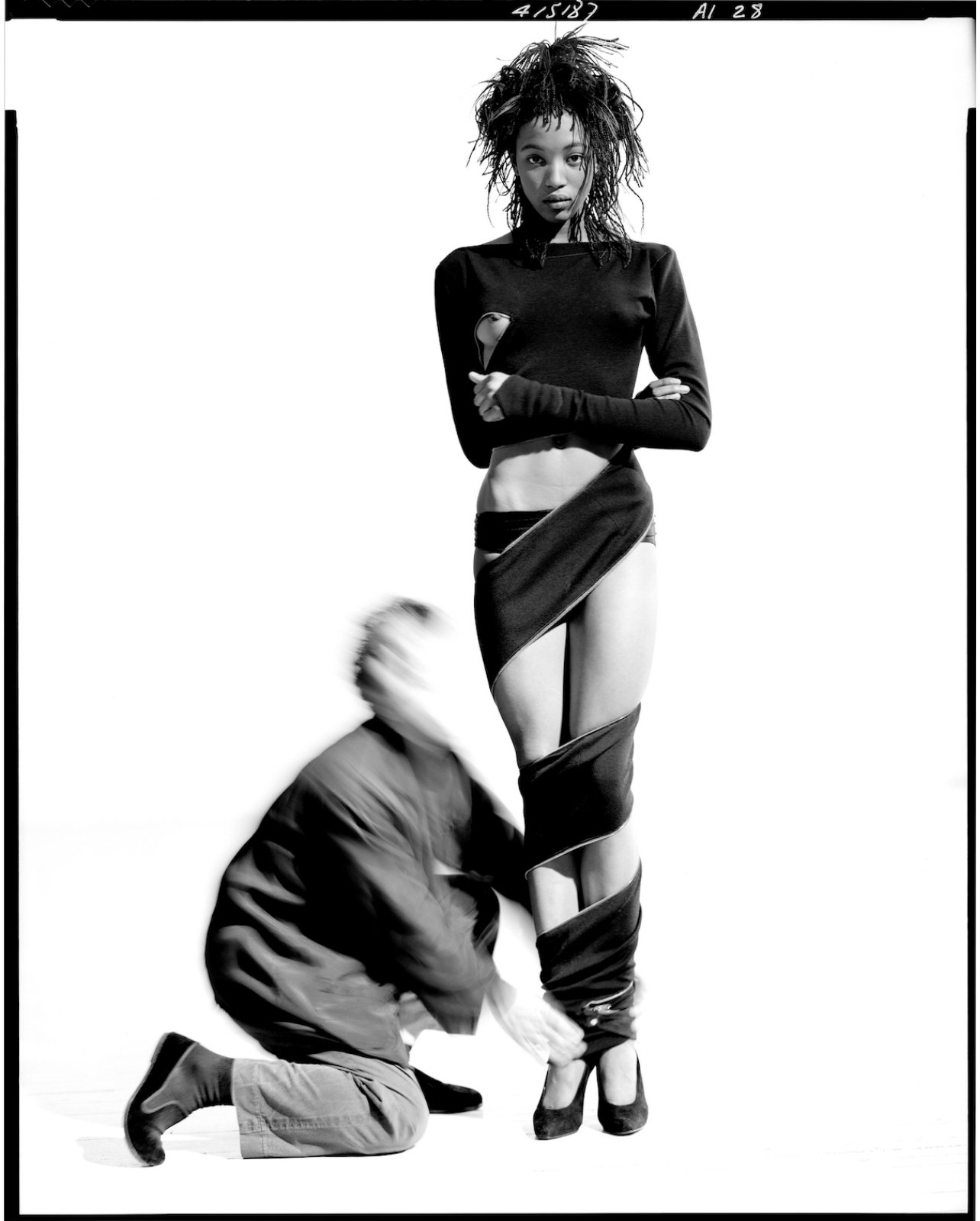
Azzedine Alaïa and Naomi Campbell. Photograph by Arthur Elgort, 1987.
It was 2017 when Azzedine Alaïa died, an event that feels like only yesterday. In life, the couturier always had a certain gift for defying the conventional passage of time, an especially impressive feat in an industry ruled by calendars.
He was known to grace the runways well after Fashion Week had already ended, and for rejecting notions of seasons and zeitgeist. His vision was about timelessness, and the sculptural exploration of material, silhouette, detail and motion.
When he rose to fame in 1982, he was already in his mid-forties; he reportedly spent six years perfecting the construction of a honeycomb pattern and he presented his work when it was finished, no sooner. “I am like fruit,” he said in 2016. “When I’m ready, I’m ready.” This so-called “Alaïa time” is a recurring theme in “Alaïa Afore Alaïa,” a new tome edited by Carla Sozzani and Olivier Saillard to be released this fall.
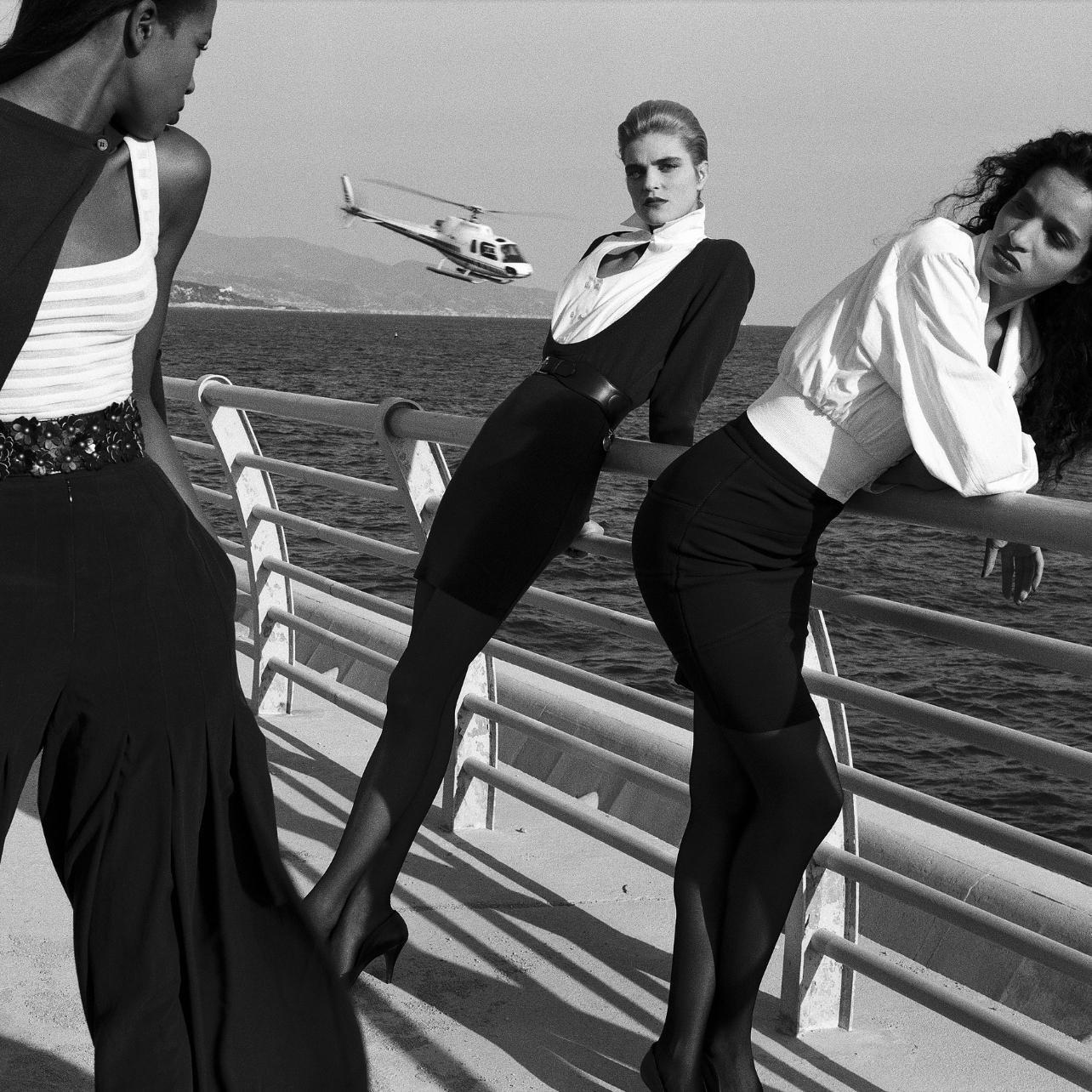
Models wearing Alaïa, photographed by Helmut Newton and published in Vogue, 1987.
Beginning with his early childhood in Tunisia, the book pays particular focus on the 26-year period between Alaïa’s 1956 arrival in Paris and his first ready-to-wear collection in 1982. The essays and sumptuous photography illustrate this time as a period of incubation and the perfection of craft, the honing of a particular worldview and unparalleled skill. “It would seem that in these years, Alaïa stitched the future right onto all the classical shapes he encountered, to teach them how to fly, on their own, in the future,” writes contributor Emanuele Coccia. “Twenty-six years was the time it took to escort the contemporary towards eternity.”
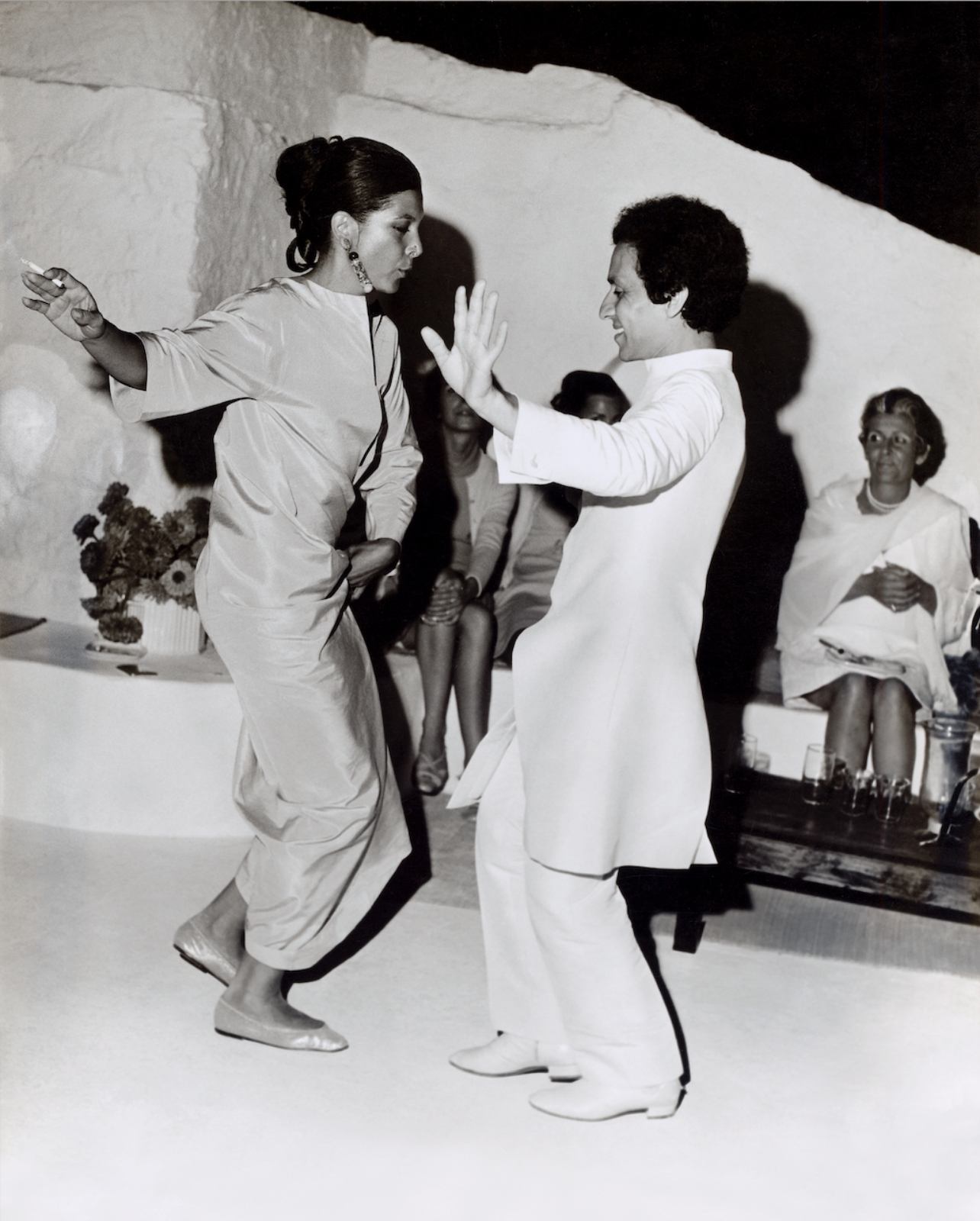
Leila Menchari and Azzedine Alaïa, at Jean-Claude Pascal’s house, Hammamet,1966.
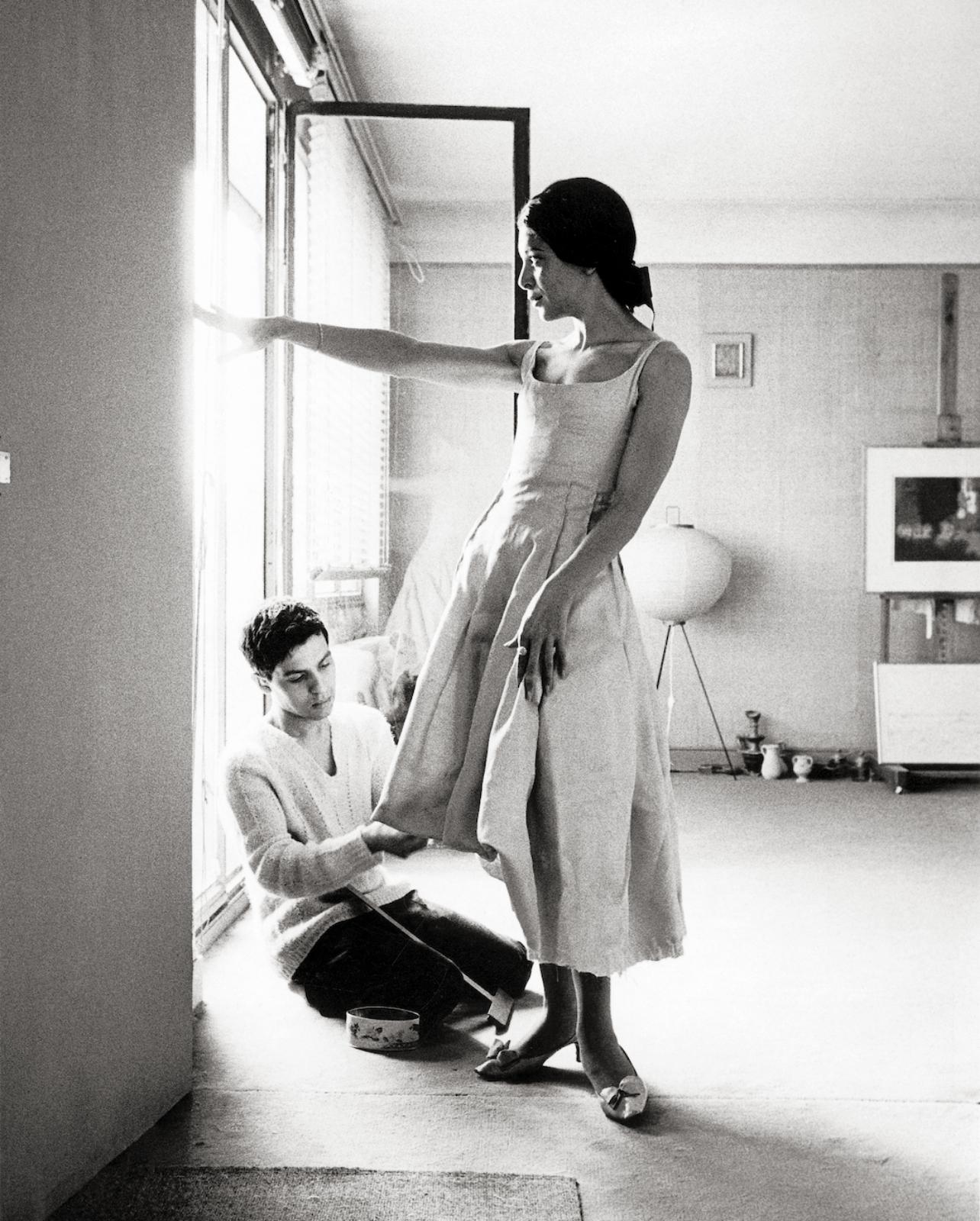
Leila Menchari and Azzedine Alaïa, rue de Bellechasse, 1967.
All Images from Alaïa Afore Alaïa (Rizzoli), available now at Books & Books: © Jean-Pierre Ronzel. Archives Hermès, © Helmut Newton. Courtesy of Helmut Newton Foundation, © Paolo Roversi.