By Deborah Frank
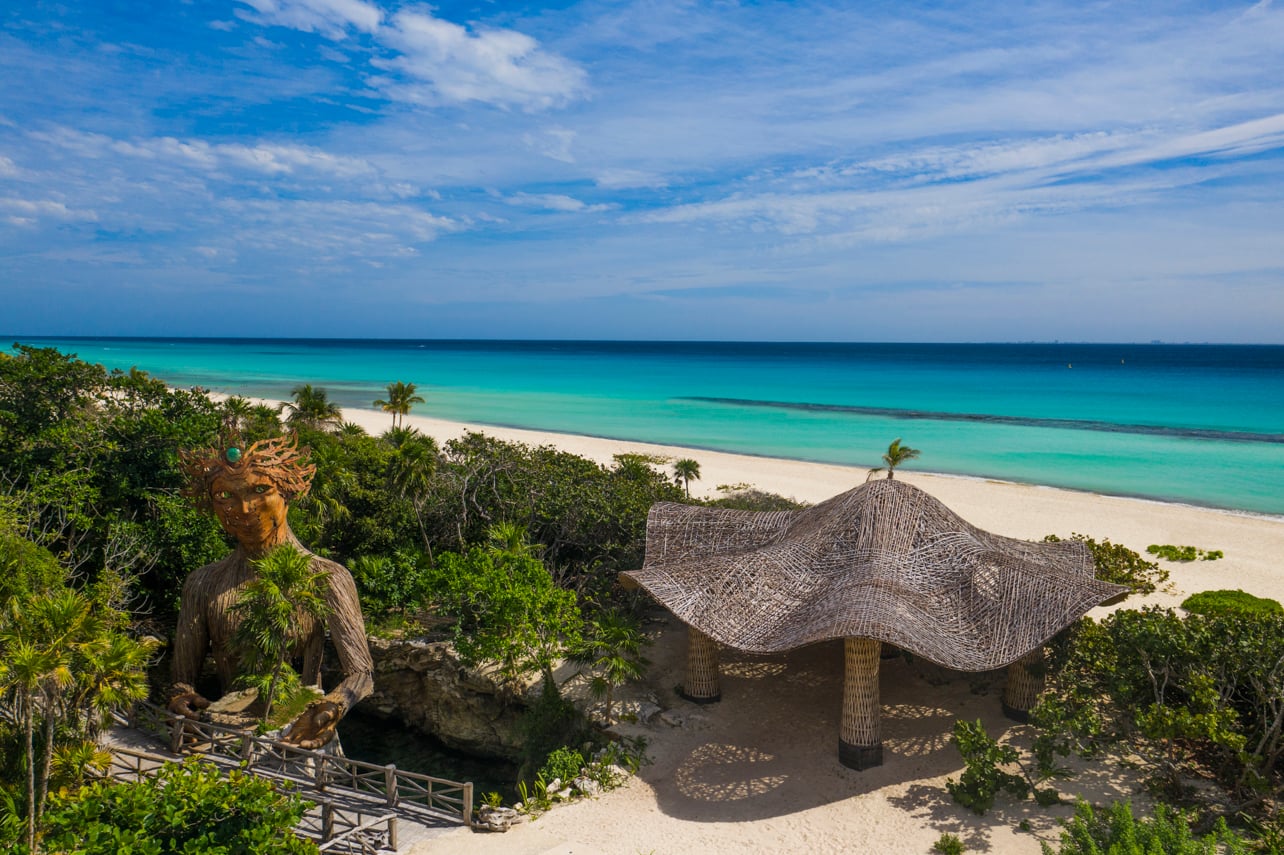
A nearly 50-foot sculpture of the goddess Aïa watches over the Palmaïa resort.
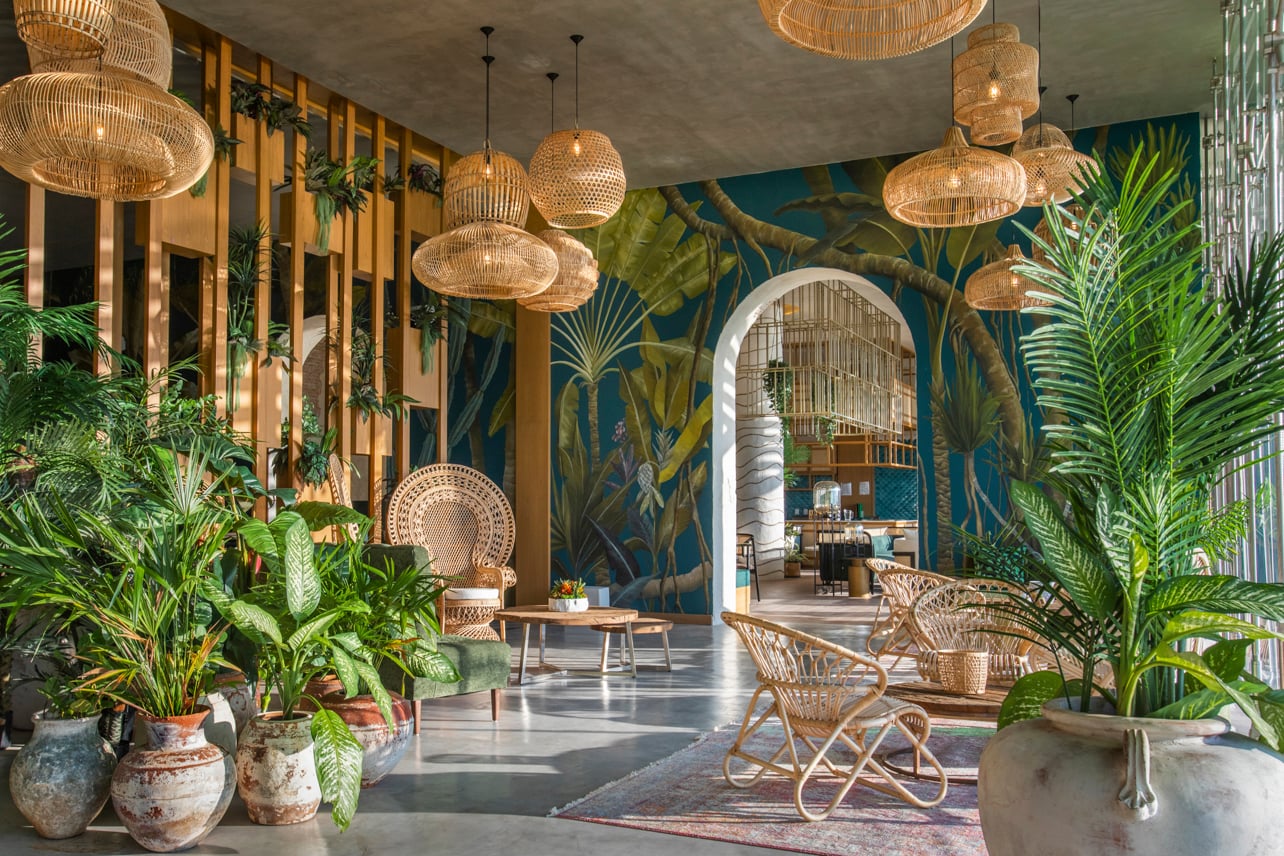
Half-hidden between mangroves and the Caribbean Sea, Palmaïa is less a resort than a rhythm. The days at Palmaïa begin with breath. Not metaphorically, but literally. At 7 in the morning, while Mexico’s Riviera Maya is still hushed, guests gather beneath an open-air tent for pranayama, the ancient practice of controlled breathing. The light is soft, the waves in the distance crash on the shore, the tent’s architecture hangs intentionally low and sheltering. It’s as if the entire place has been designed to coax you into exhaling.
Palmaïa, The House of AïA, does not feel like a resort that has added wellness as an amenity. It feels built around a different premise entirely, one that believes restoration is not something you schedule for an hour between the pool and dinner, but something you slip into gradually, almost without noticing, until your body begins to remember what it means to be quiet.
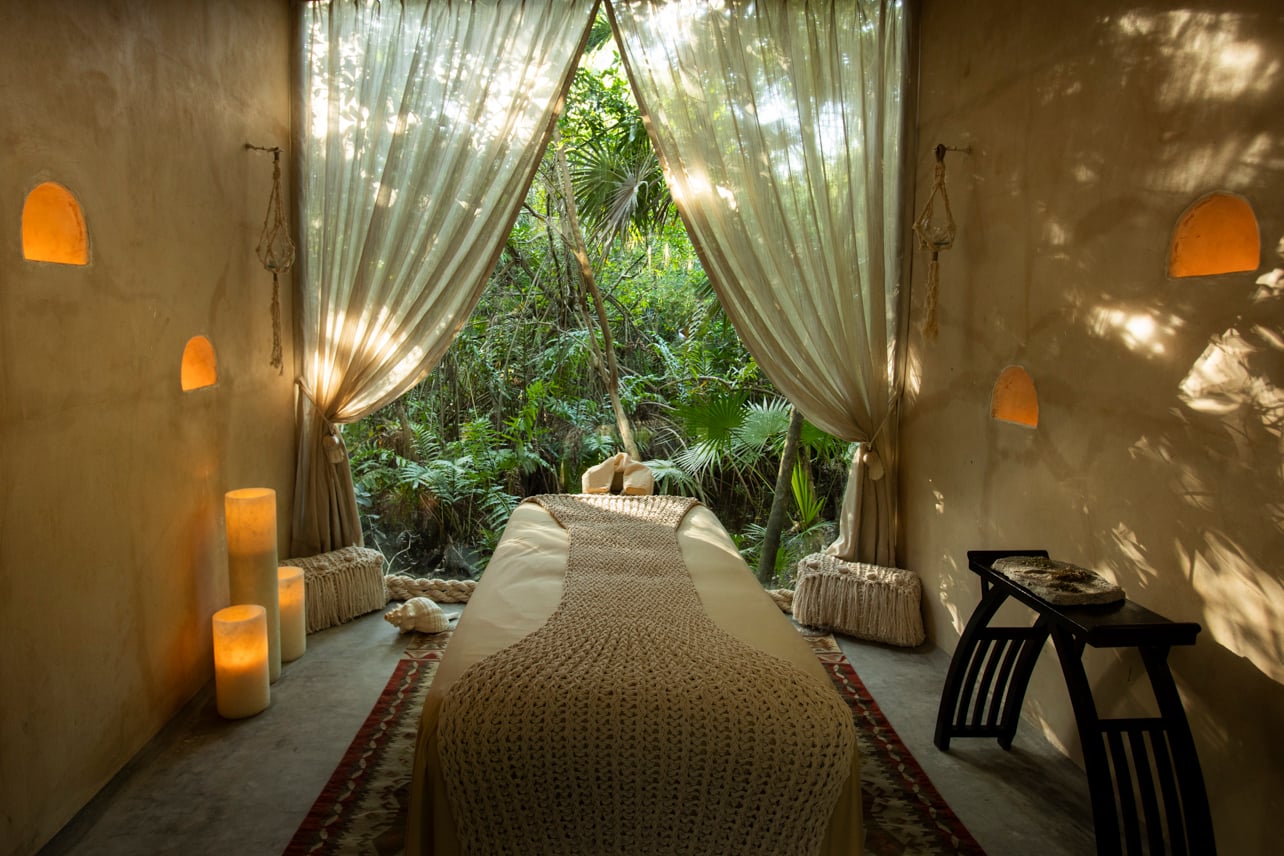
Palmaïa’s Atlantis Spa, set deep within the jungle.
“We believe in conscious well-being,” says founder Alex Ferri, “and have created a space rooted in presence, where one can return to self, to nature, and to the spirit of transformation.”
That return is physical as much as it is emotional. Only a small portion of the land has been developed; the rest remains dense jungle, wrapping the property in green shade and keeping the air cooler than the open heat that can be felt along the coast. It’s especially noticeable (and appreciated) during the hot summer months. Biking and walking paths curve circuitously around spaces that reveal themselves slowly: a beach pergola low to the sand, a pocket of hammocks in the mangroves, a yoga deck beneath trees. Nothing is rigid or repetitive, and that is part of the point.
Ferri speaks often about rhythm—how predictable luxury can become, how quickly even the most beautiful hotels fall into the same choreography. “The problem is that it’s fixed,” he says. “Every day feels the same.” Palmaïa was designed to resist that sameness, to feel more like discovery than routine.
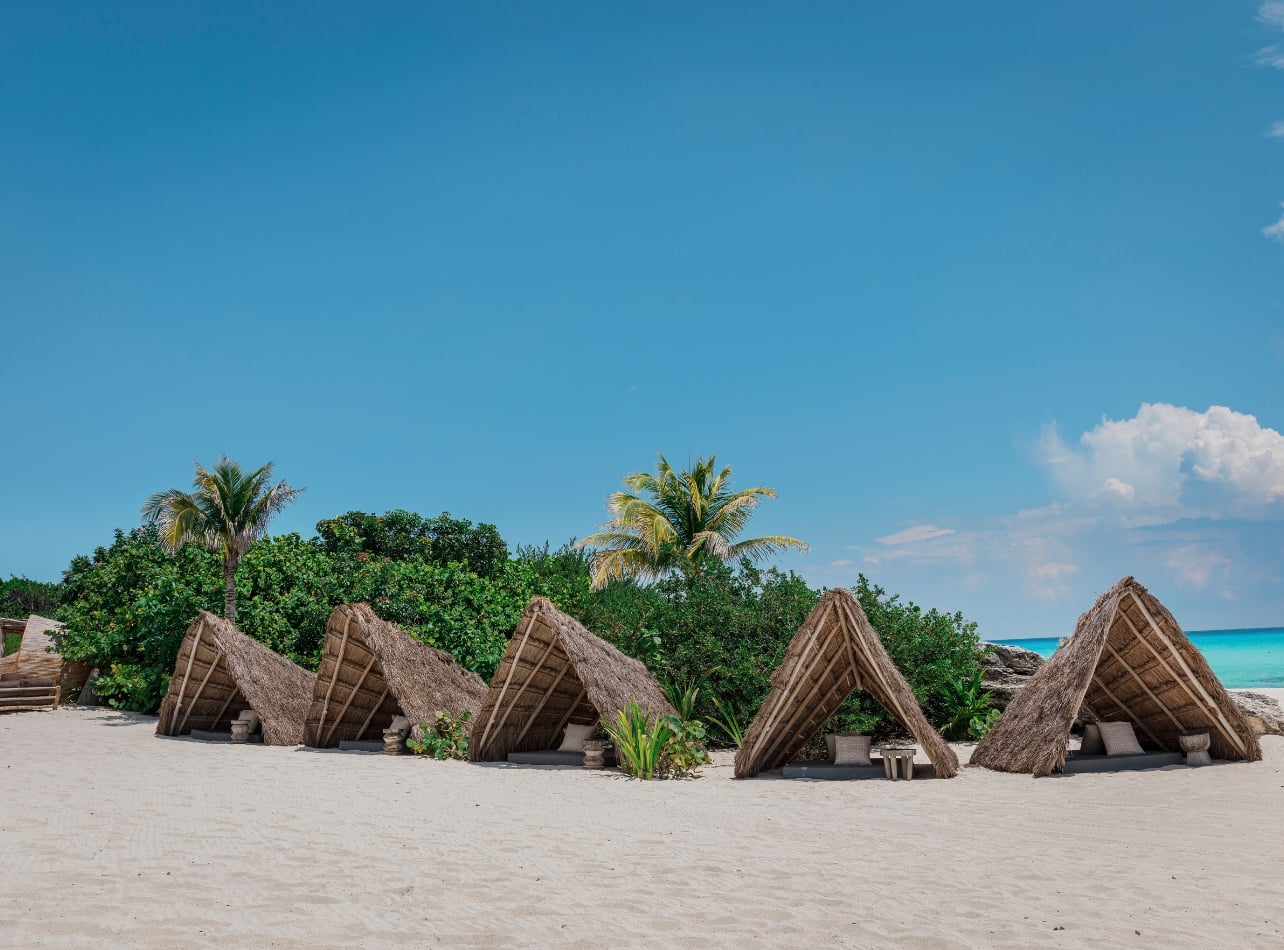
Private thatched huts lining the beach.
It opened in 2020, during the strange early months of Covid, and has grown quietly into one of the most sought-after wellness destinations in the world, drawing travelers who want something more soulful than what Ferri calls “Vegas on the beach.” The atmosphere here is notably unperformative. This is not a place built around being seen. “You’re coming here to be yourself,” Ferri says, “with a different intention.”
That intention is supported by Palmaïa’s Gifting Lifestyle, an all-inclusive model that removes the transactional friction that so often interrupts wellness elsewhere. There are no checks to sign after yoga, no extra charges that turn serenity into arithmetic. Instead, guests move fluidly through the experience, steered by what Palmaïa calls Nomadic Guides. They are your personal concierges who communicate via WhatsApp, arrange everything from dinner reservations to forgotten essentials, and send brief words of inspiration each day.
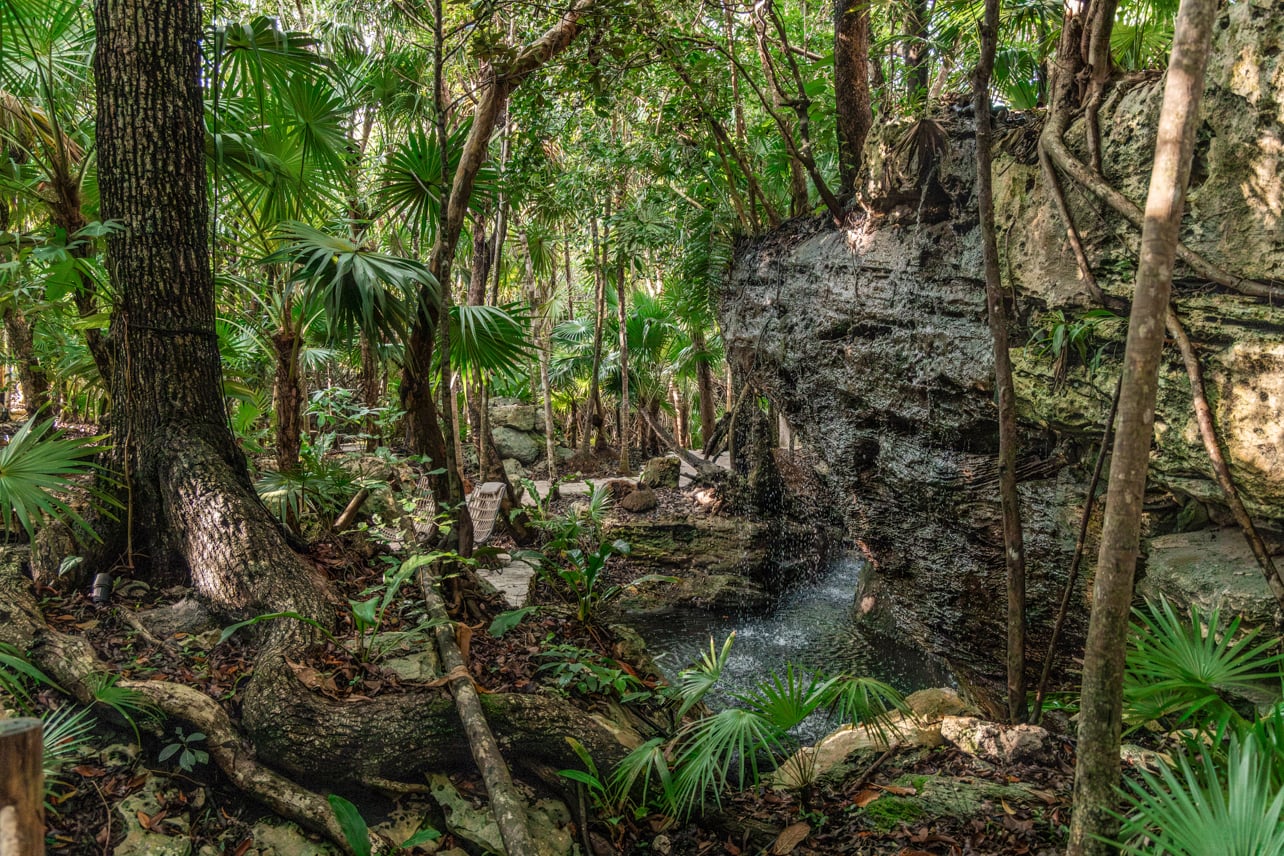
An on-property cenote is nothing short of magical.
The resort requires a minimum stay of four nights, and it makes sense. Palmaïa is not a place you rush through. It works subtly, over days, in the way your nervous system begins to loosen when it realizes it is no longer being asked to brace. There is no prescribed program, no rigid retreat structure. Instead, more than 50 activities unfold across the week—yoga, breathwork, sound rituals, watercolor painting, movement classes, even workshops tied to indigenous mushroom traditions. The variety keeps the experience from becoming rote; practitioners shift, sessions change, nothing repeats in quite the same way twice.
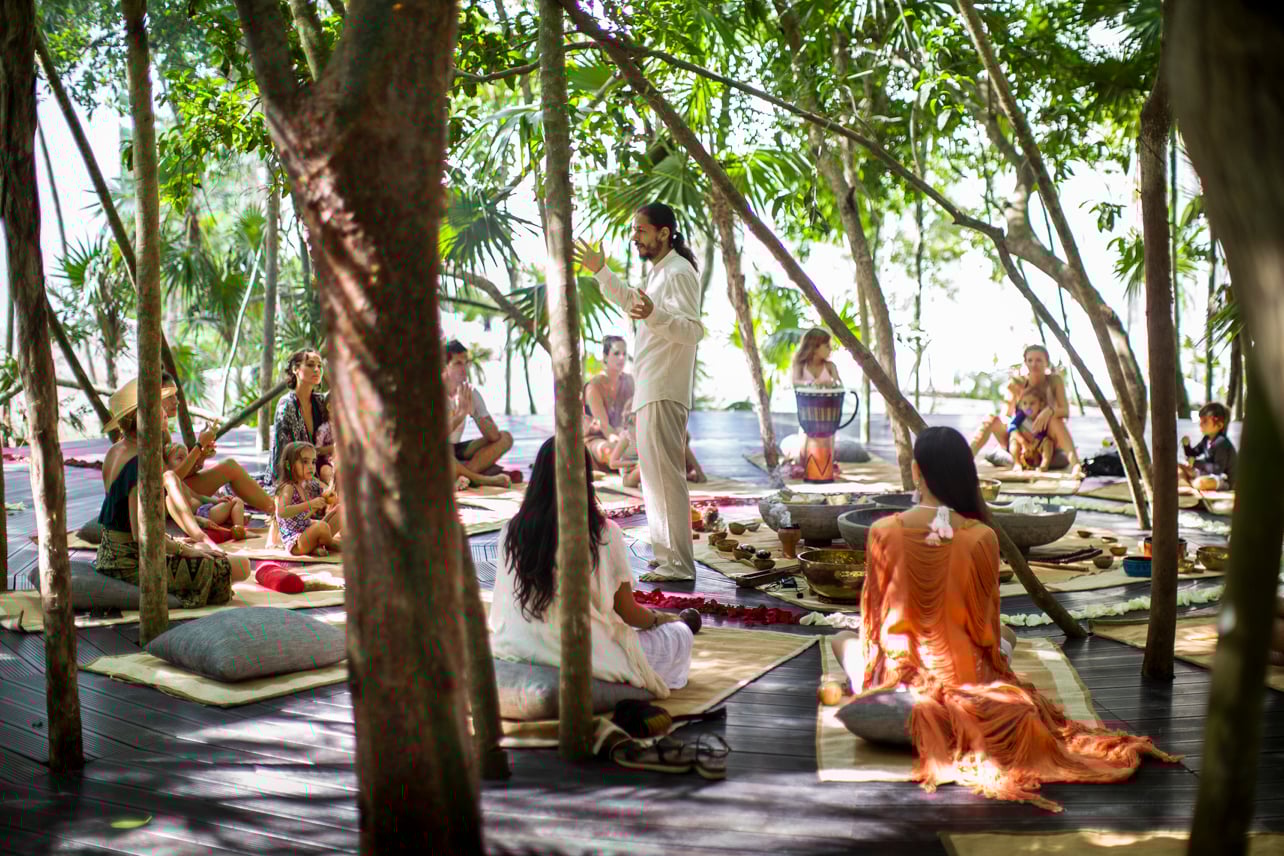
An al-fresco pranayama (controlled breathing) practice.
“Palmaïa meets you where you’re at,” Ferri says. You can arrive as someone deeply immersed in a wellness practice, or as someone simply exhausted, curious, unsure. The design is gentle rather than coercive. “We’re not telling you what to do,” he says. “We’re just letting you be. And by letting you be, you’ll discover something.”
Food is one of the most immediate discoveries. Palmaïa’s Nourishing Biome philosophy is plant-forward and uncompromising about ingredients: no seed oils, no refined sugars, no processed shortcuts. And yet it does not feel austere. Across six dining venues, dishes are vibrant, sensorial, surprisingly indulgent. Portions are thoughtfully sized, encouraging variety without waste. Wellness here is not presented as restriction, but as clarity.
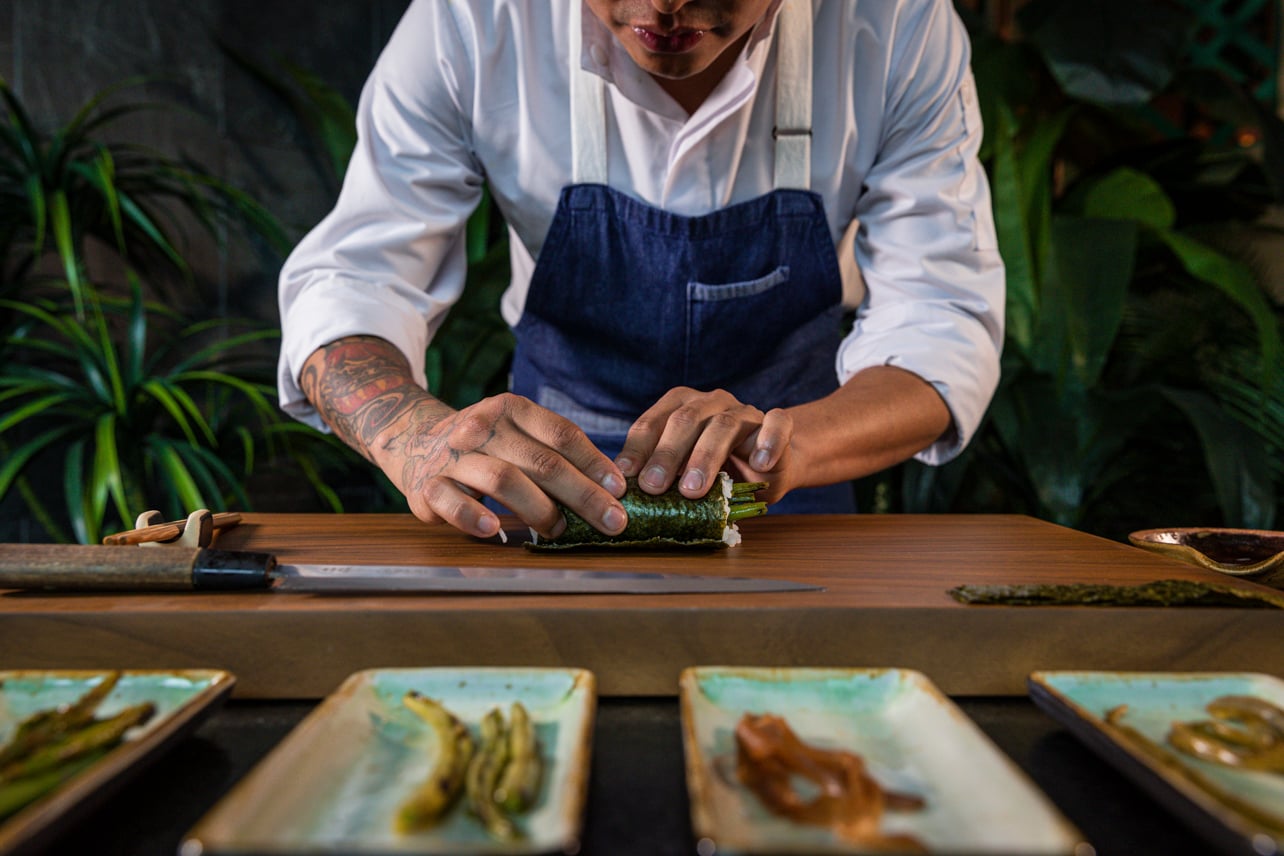
Ferri adopted plant-based living more than 15 years ago, first out of compassion, then conviction. “Energy exists,” he says simply. “Eating something that’s been killed carries a vibration. I don’t want that energy.” By the fourth day, the effects are less ideological than physical. Your cravings soften, sugar loses its urgency, even salt becomes less insistent. You feel more awake, lighter, not because you are deprived, but because your body has had space to reset.
On Friday nights, that nourishment becomes communal in a fermentation dinner for those interested in participating. Guests gather around shared tables, learning and tasting together. Palmaïa’s version of wellness is notably connective. It does not isolate you in private self-improvement. It invites you into rhythm with others, if you’re so inclined.
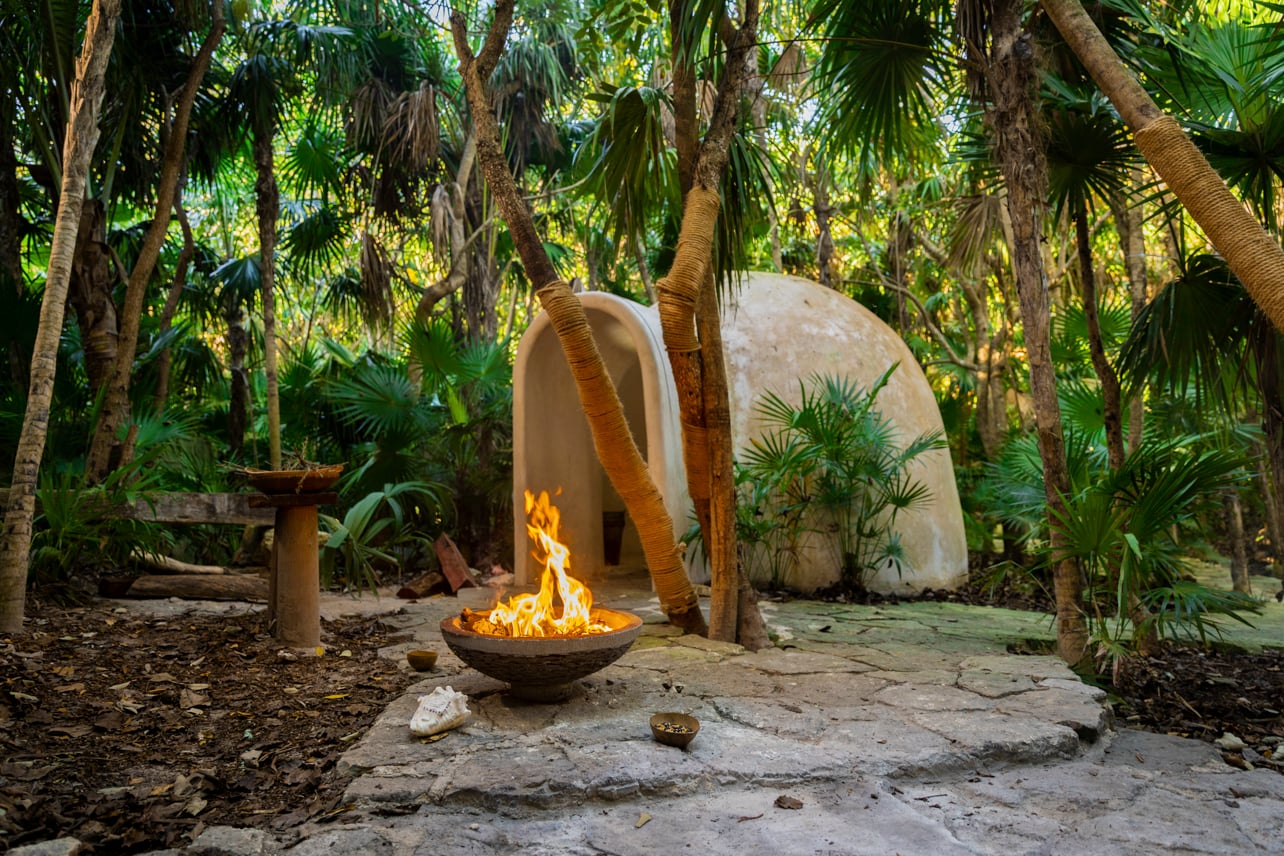
The temazcal, a traditional, indigenous sweat lodge, offers deep release and healing.
And then there is Atlantis Spa, set deep within the jungle, where Palmaïa’s philosophy becomes most ceremonial. Atlantis is less a spa than a sanctuary, shaped by indigenous Mexican healing traditions and reverence for ritual. Its signature experience is the Temazcal, a sweat-lodge ceremony held within a dome-shaped temple, meant to evoke rebirth. Preparation begins hours before: light meals, deep hydration, quiet intention-setting. Inside, volcanic stones steam with medicinal herbs. Guests chant, meditate, call in the four elements, speak their names into the heat. Each person arrives with a different reason, whether it be grief, forgiveness, or the desire to release something carried too tightly. You emerge slowly, crawling out into air that feels newly alive.
Other treatments feel equally rooted. A Mexican massage incorporates abdominal work and indigenous healing tools. Paired with a steam in the temazcal followed by a cooling cenote immersion beforehand, it’s Palmaïa’s own version of a hydro-ritual circuit. Schedule a one-on-one deep stretching session before heading to the airport, and afterward the day will seem to hold a kind of quiet lucidity. Palmaïa has the ability to exceed expectations, not because it promises transformation, but because it allows space for it. In the end, that may be its rarest luxury: the simple, almost unfamiliar sensation of feeling yourself return.
All images Courtesy of Palmaïa