By Samantha Brooks
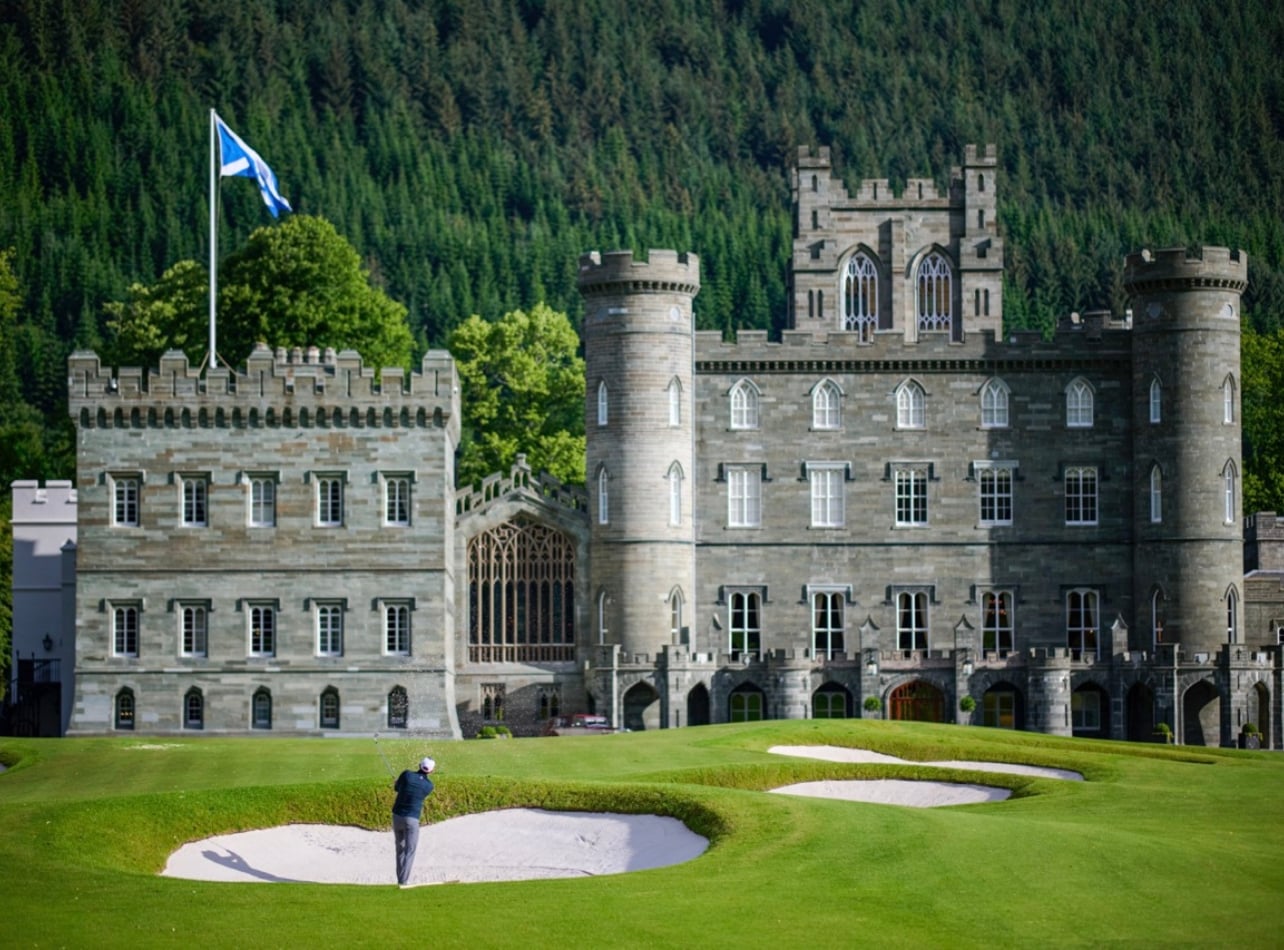
Scotland’s 200-year-old Taymouth Castle looms large over its famed golf course, originally designed in 1925.
Set across 7,000 acres nearly 80 miles north of Edinburgh, Taymouth Castle, one of Scotland’s most significant privately held estates, is entering a new chapter—one shaped not only by its storied past, but by a modern vision of living well. The 200-year-old Gothic Revival landmark has been resuscitated as a members club and residential community by Discovery Land Company, the developer known for its comfort-forward approach to high-end resort communities, from Yellowstone Club in Montana to El Dorado in Los Cabos.
To bring Taymouth back to life, Discovery enlisted London- and Sussex-based interior designer Kate Bingham, whose work spans posh city flats to a Charleston-inspired home in a private Vero Beach, Florida, community. Over four years, Bingham led a restoration of the castle’s 540,000–square-foot interiors, blending historical grandeur with the warmth and ease today’s members expect.
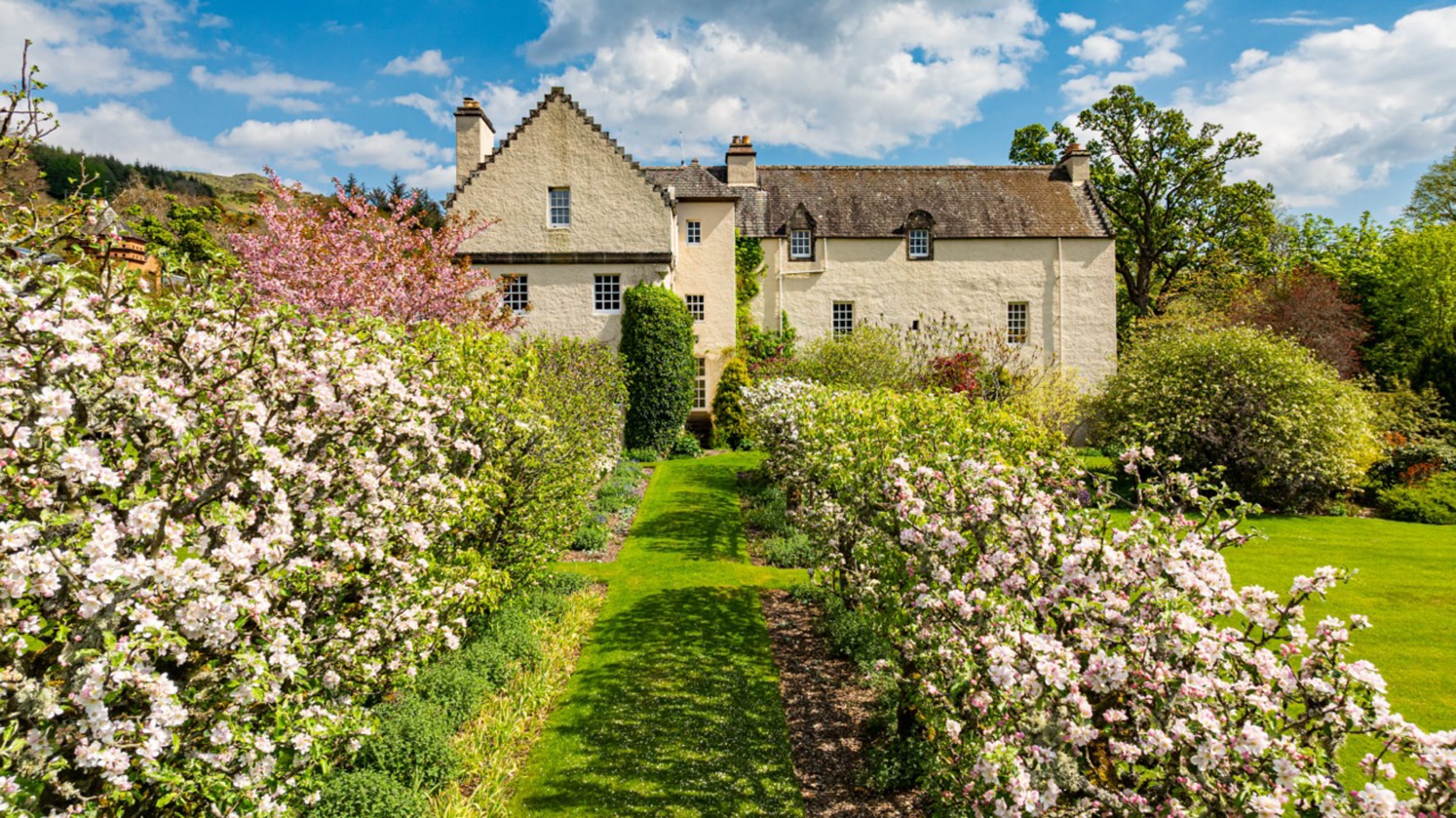
Interior designer Kate Bingham spent four years restoring Taymouth Castle.
“My first encounter with Taymouth was overwhelming—not just visually, but emotionally,” says Bingham. “You felt its history immediately. But once inside, it became clear how vulnerable parts of the building were. This wasn’t simply a restoration project, it required a strategic, deeply respectful approach to ensure the castle could endure for generations to come.”
Originally built in 1801 for Clan Campbell, Taymouth Castle is famed for enchanting rooms like its Chinese drawing room and library (now used as a private dining room), spaces so significant they were listed with Historic Environment Scotland. Yet decades of neglect had left the castle in disrepair, awaiting the right steward to restore its legacy.
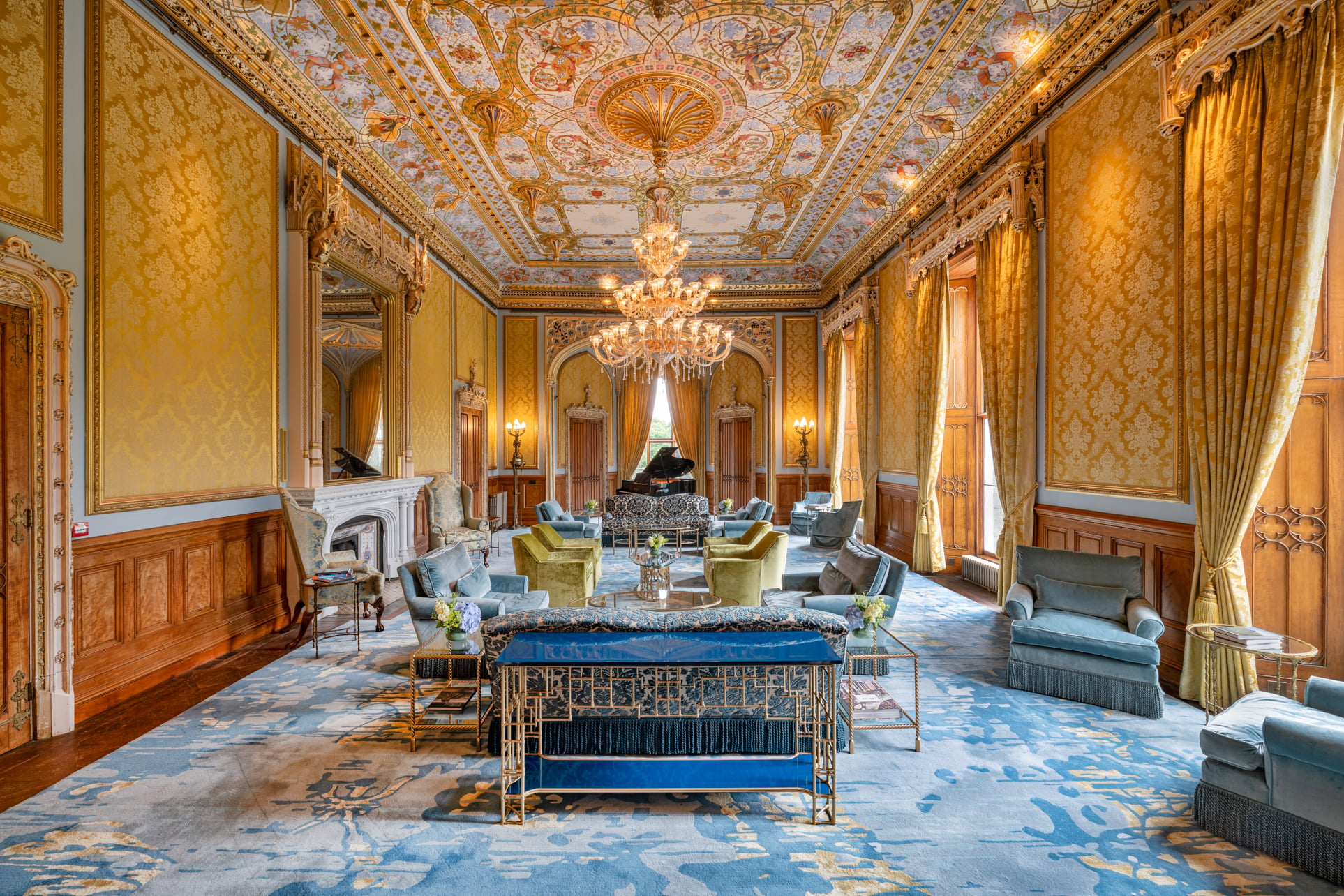
The heavily gilded Chinese drawing room and library.
That legacy includes one of Taymouth Castle’s most legendary moments: Queen Victoria and Prince Albert’s three-day visit in 1842, her first trip to Scotland. Her hosts spent 80,000 (GBP roughly 8 million in today’s value) to prepare for their arrival. The castle became a spectacle of its era, serving meals for 730 people a day, and providing elaborate entertainment, including then-exotic fireworks.
Today, Taymouth Castle is once again a place of gathering, though with a different kind of extravagance. Discovery’s resort communities are defined by relaxed exclusivity and expert-led outdoor pursuits—here, beyond lessons on the links, one might try clay pigeon shooting, or stag and hind stalking. What’s more, Taymouth Castle offered the brand the rare opportunity to apply that signature ease within a historic setting.
“Having realized that it would be part club, some notes of the brief were about what members would expect to see at a Discovery property, whether it was located in Scottsdale or Scotland,” says Bingham. “Things like great gathering spaces, rooms dedicated to kids and teens, and comfort stations. The goal was never to modernize Taymouth, but to allow it to function beautifully again—to feel warm, coherent, and, of course, luxurious.”
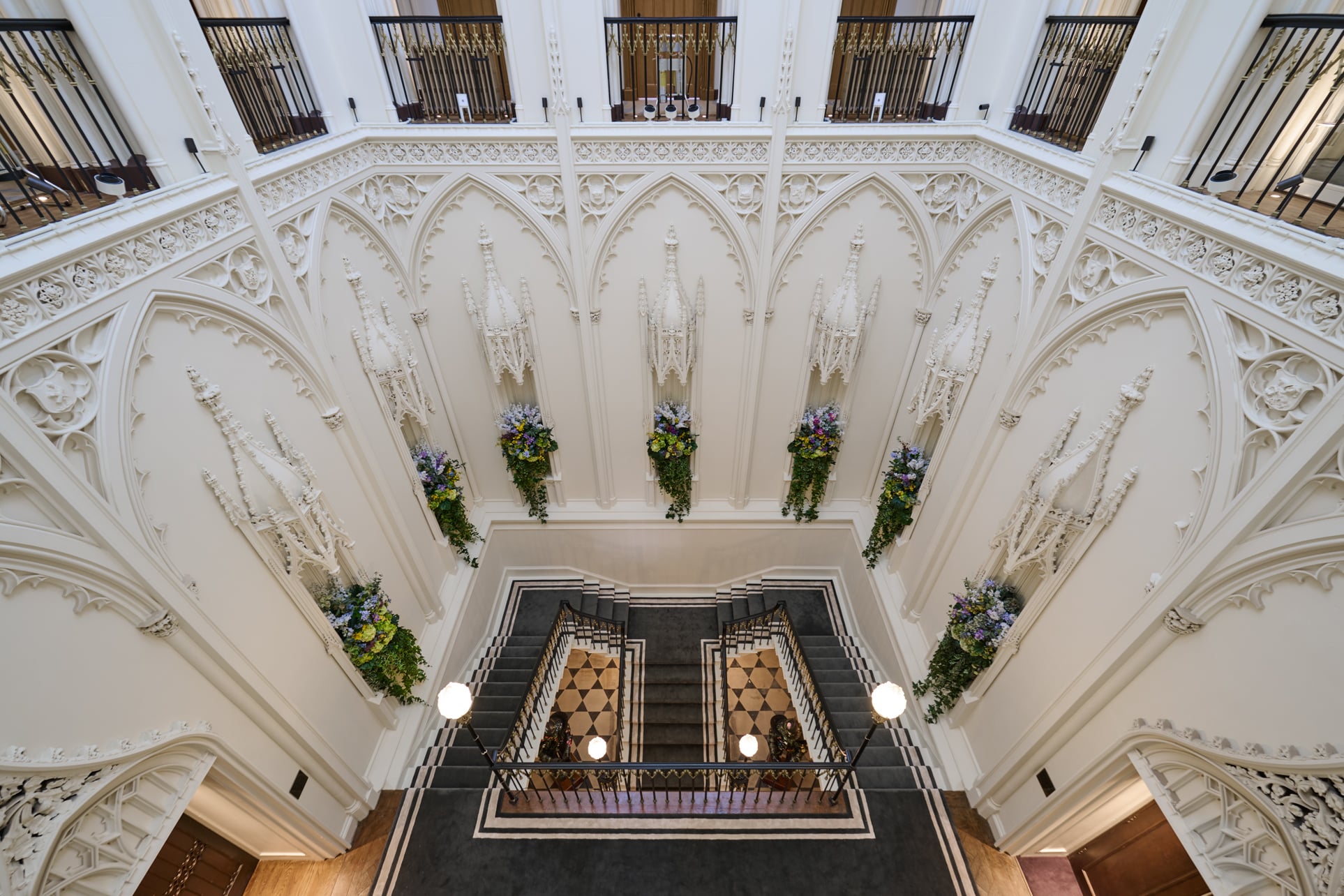
It took a year to repair the scaffolding surrounding the castle’s central staircase.
At Taymouth, rather than starting from scratch, Discovery’s task was to honor the myth and memory of what had come before, reviving a landmark estate while making it livable, welcoming, and enduring. For the renovation, Bingham drew inspiration from iconic hotels including the Ritz Paris, the NoMad London, and the August Antwerp. The directive was clear: Taymouth Castle should feel elevated and immersive, but never overly formal.
The experience begins on the ground floor, where guests arrive into a warm reception space alongside a tavern-style pub and open kitchen. It’s an intentional shift away from museum-like grandeur toward something more convivial. Upstairs, Taymouth Castle’s most celebrated rooms unfold: the drawing room, a whiskey bar, private dining spaces, and intimate turrets to enjoy a wine tasting, or tea service.
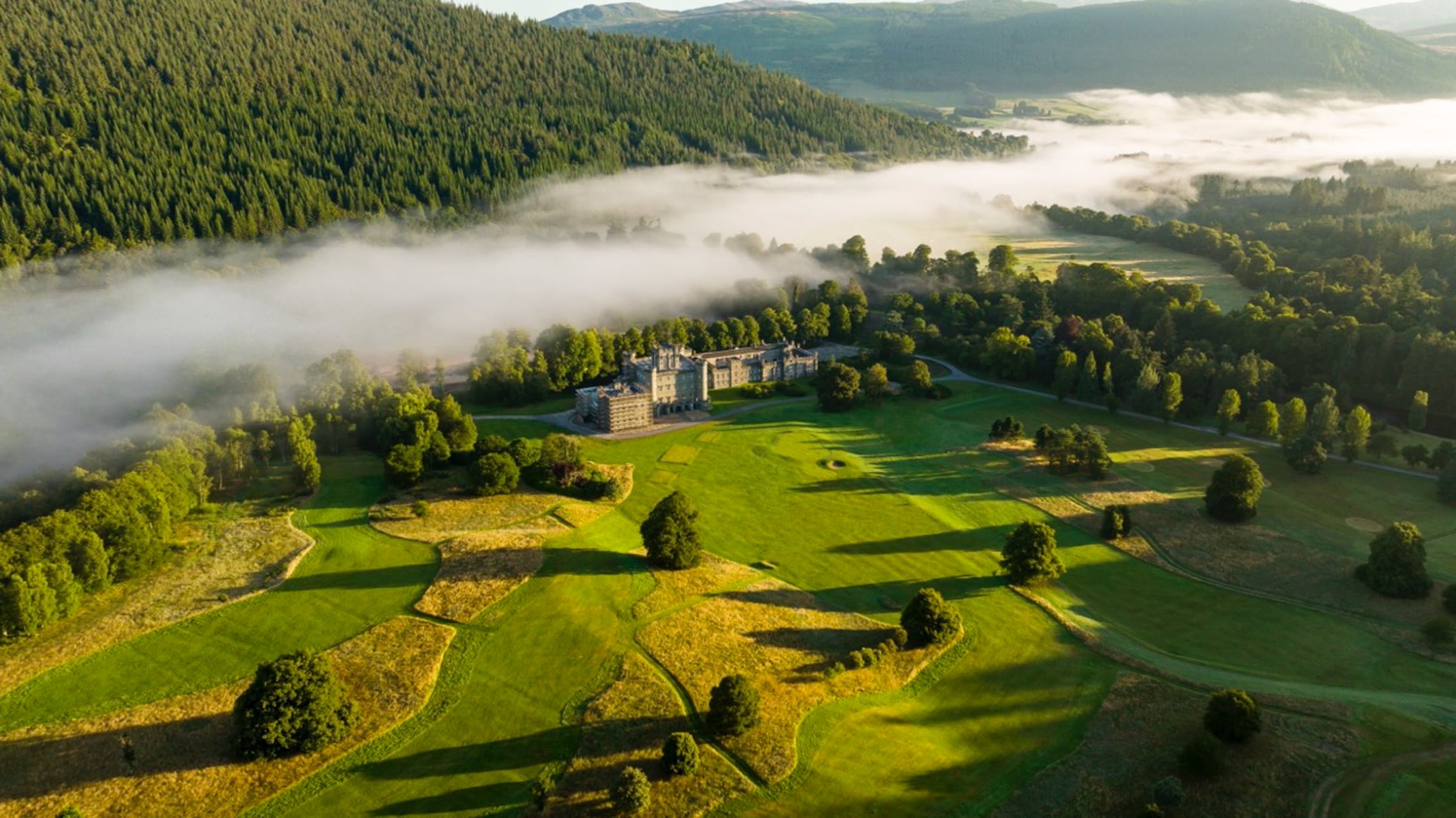
Taymouth’s golf course was first designed in 1925 by famed The Open champion James Braid.
Above it all are nine one-bedroom suites, each designed as a serene retreat. Pale oak chevron floors, cream-toned fabrics, brass accents, and velvet curtains in jewel shades of blue and green create an atmosphere that feels quietly sumptuous rather than showy.
And yet, part of Taymouth Castle’s magic is simply its scale. Wandering, as Bingham puts it, is almost an offering in itself. “Admittedly, I did 37 trips there in four years,” she says, “and it took me six months to stop getting lost.”
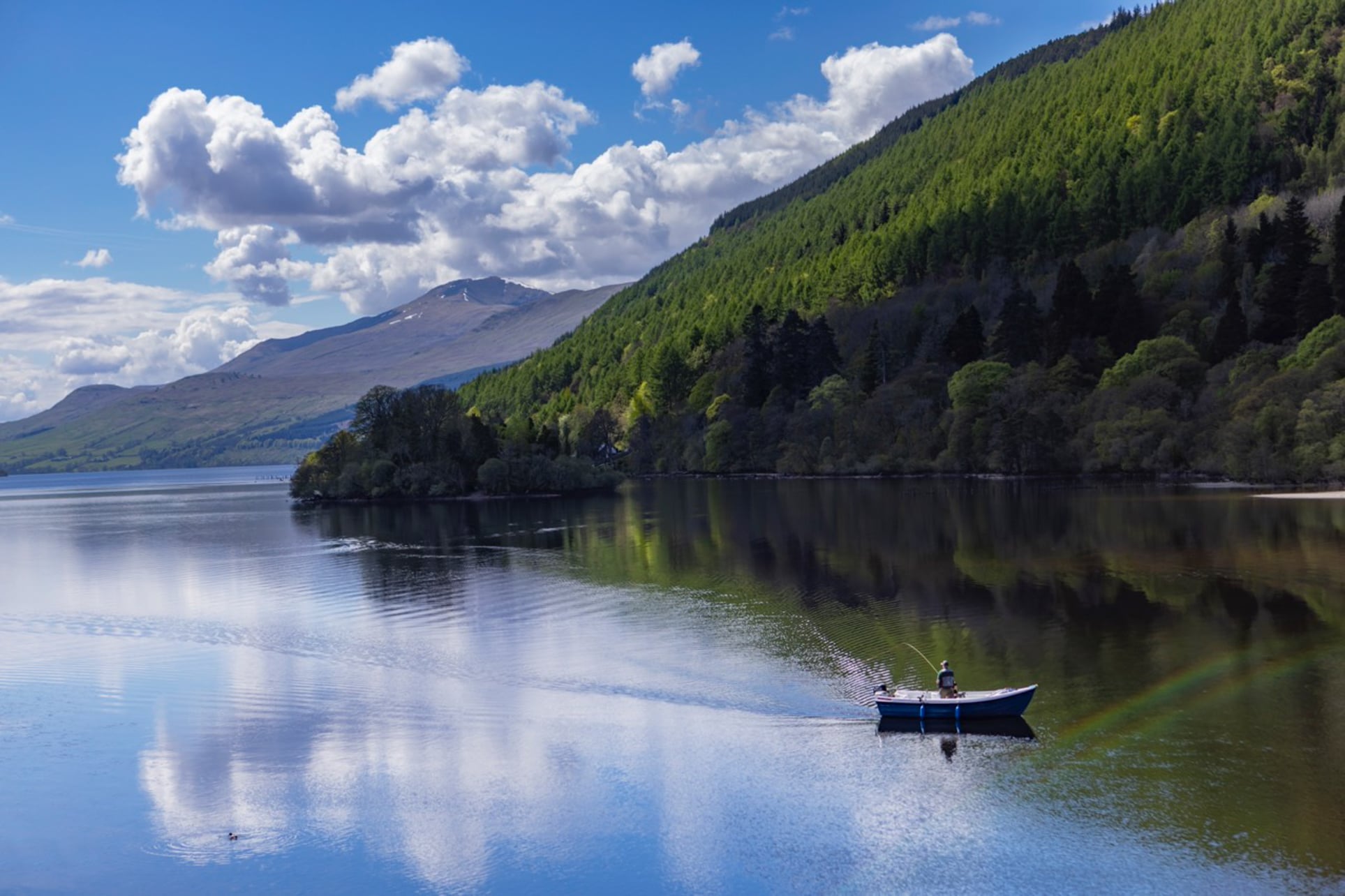
In the summer, guests are able to enjoy fishing and watersports.
In some spaces, restoration meant reunification. Outfitting the private dining room, became a kind of historical detective story: Bingham worked with an antiques dealer to track down 22 chairs that belonged to Queen Victoria’s original dining table, which had been sold off and scattered across Scotland. Once recovered, they were reupholstered in blue leather and embossed with a dragon crest, an echo of the castle’s heraldic past.
Elsewhere, the interventions are more atmospheric. In the main bar, a backlit onyx counter glows beneath a decadent chandelier, while velvet walls and a hand-painted ceiling preserve the richness of traditional décor. Throughout, Bingham’s approach is one of restraint. Her design choices amplify the building rather than compete with it.
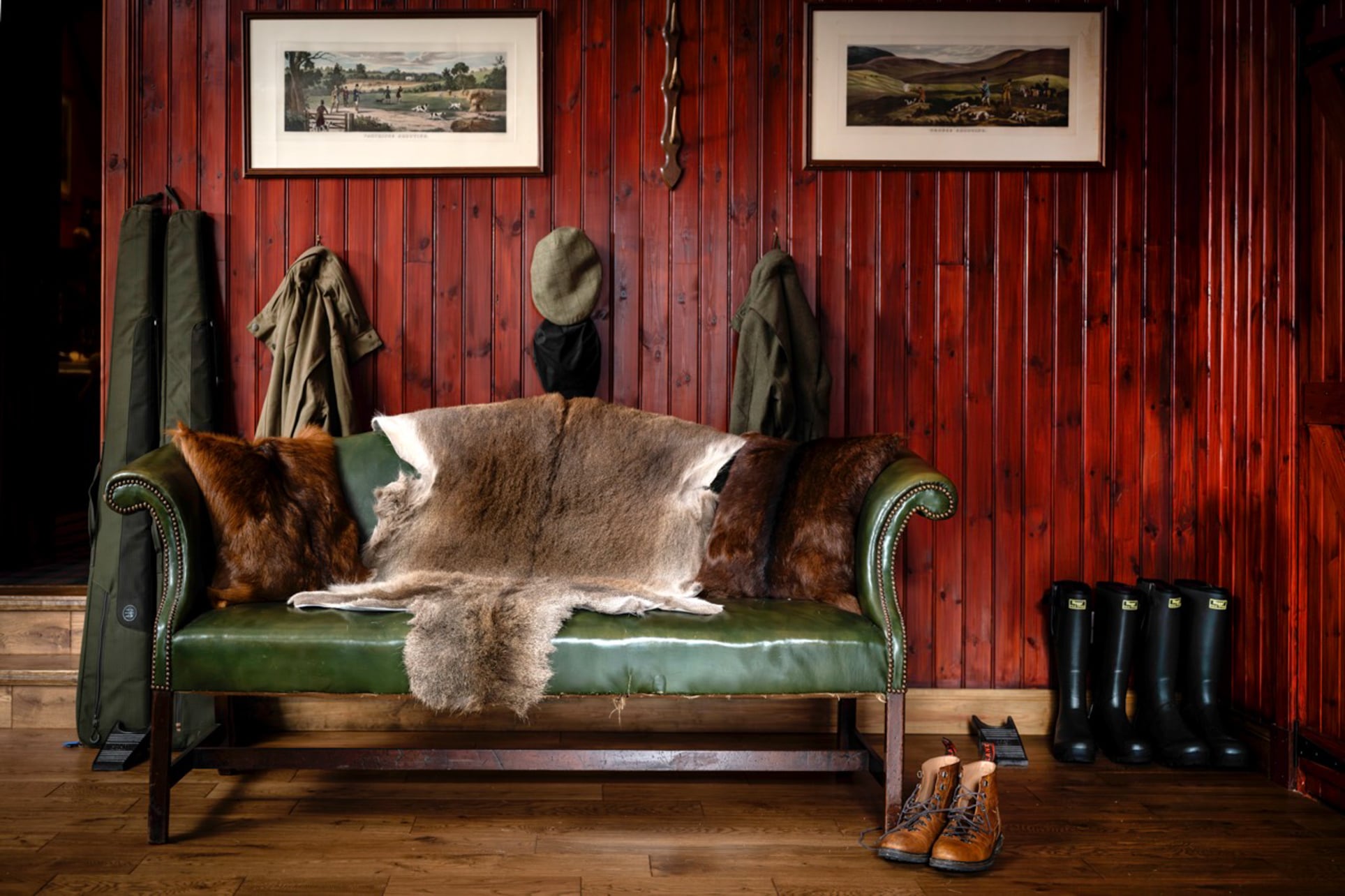
Glen Lyon, the on-property sporting facility.
Some of the most meaningful details, in fact, are nearly invisible. When Queen Victoria and Prince Albert stayed at Taymouth Castle, they each planted trees there—oak and Scots pine—three of which still stand on the grounds today. In the reception area, a triptych of plaster panels behind the desk carries a subtle tree motif. Most guests will never realize the reference, but that quiet continuity is precisely the point.
“For me, the success of a project like this lies in connection,” says Bingham. “When history, craftsmanship, and contemporary life feel seamlessly linked, the building begins to live again.”
Taymouth Castle is not simply a castle restored, but a landscape reclaimed. With opportunities for around 145 members to build homes on the grounds, the next era is unfolding not as a relic of the past, but as a private world of modern ritual, comfort, and continuity.
What to Pack
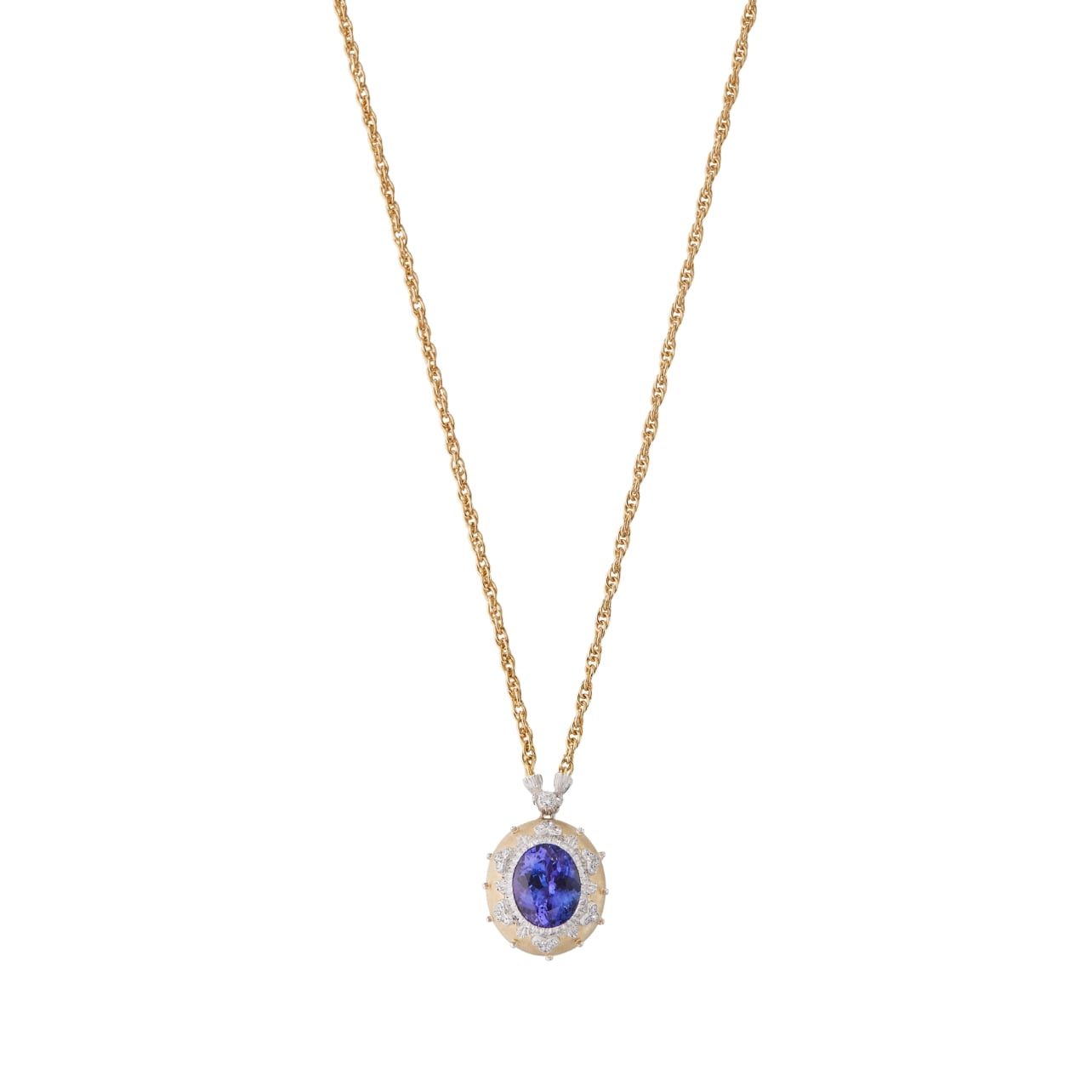
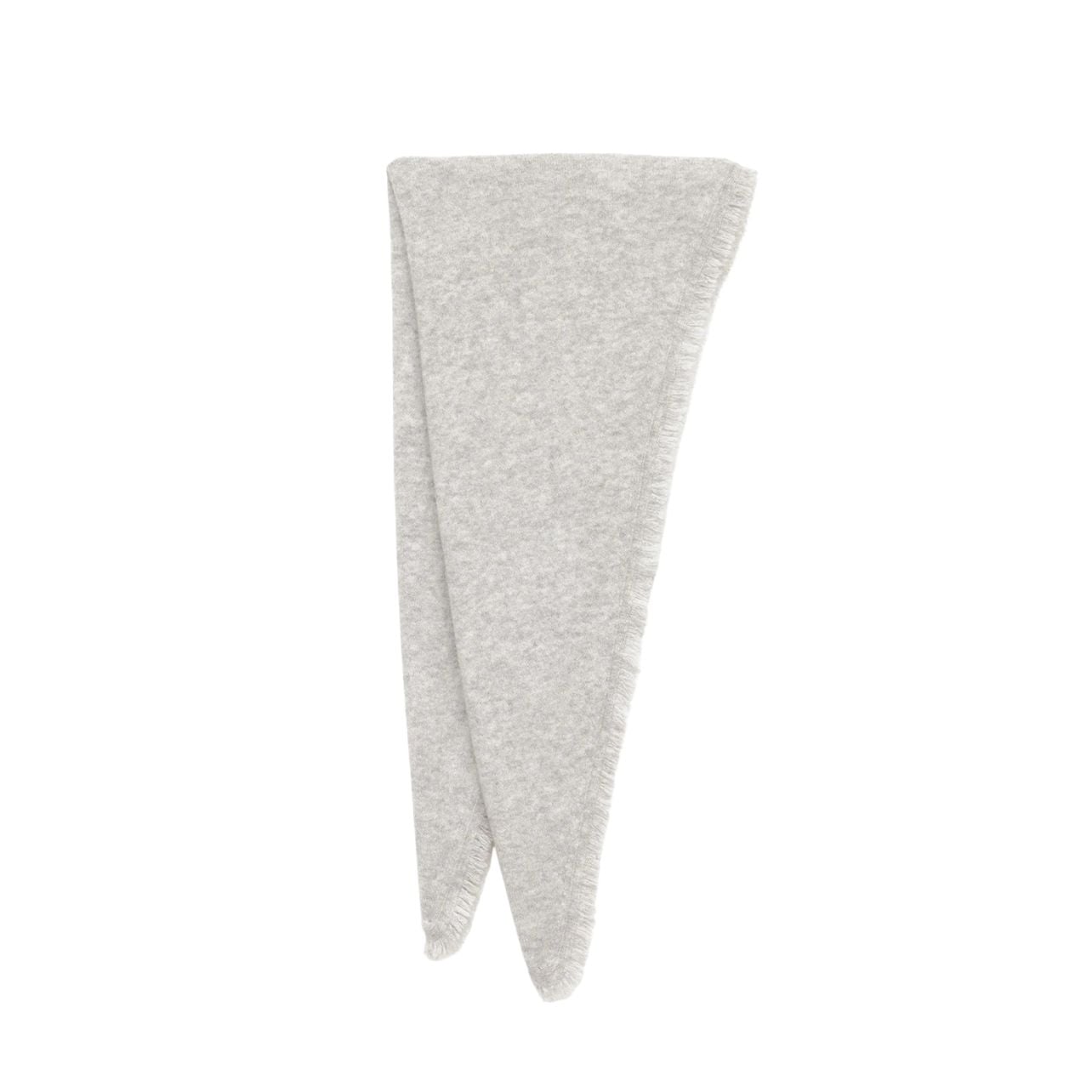
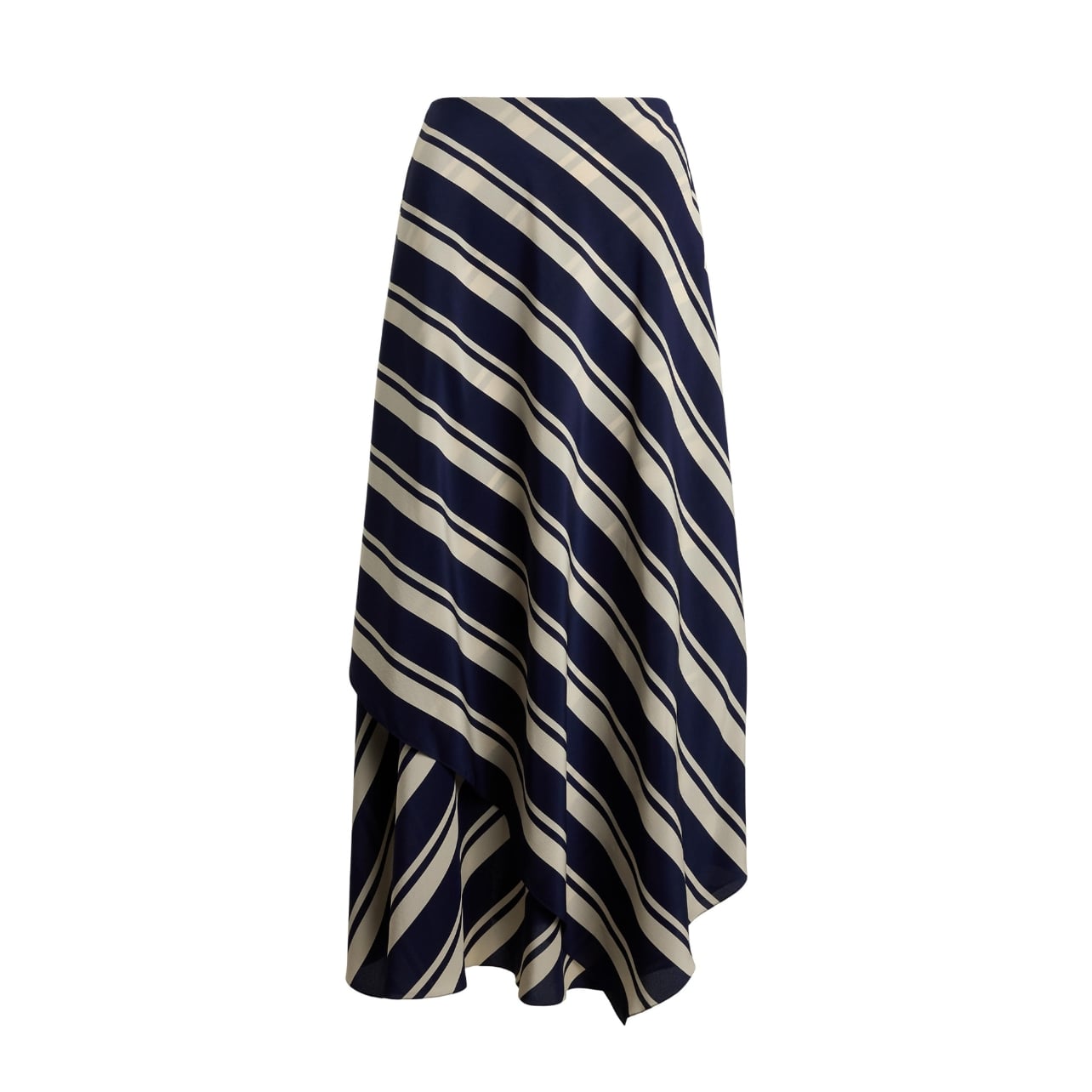
Discovery Land communities are known for a low-key sensibility around attire, eschewing club rules. While the same “rules” apply at Taymouth, the castle also offers the opportunity for embracing more traditional codes. Here, some looks to inspire your royal escape.
















All Images Courtesy of Taymouth Castle, A Discovery Land Community